Kiffmeister’s #Fintech Daily Digest (01/20/2022)

FYI yesterday I did some minor updates to my tabulation of retail central bank digital currency (CBDC) explorers: https://kiffmeister.blogspot.com/2019/12/countries-where-retail-cbdc-is-being.html.

The U.S. Dollar in the Age of Digital Transformation

The US Federal Reserve Board published a discussion paper that examines the pros and cons of a potential U.S. central bank digital currency (CBDC).  The paper summarizes the current state of the domestic payments system and discusses the different types of digital payment methods and assets that have emerged in recent years, including stablecoins and other cryptocurrencies. It concludes by examining the potential benefits and risks of a CBDC, and identifies specific policy considerations.

While a CBDC could provide a safe, digital payment option for households and businesses as the payments system continues to evolve, and may result in faster payment options between countries, there may also be downsides. They include how to ensure a CBDC would preserve monetary and financial stability as well as complement existing means of payment. Other key policy considerations include how to preserve the privacy of citizens and maintain the ability to combat illicit finance. [Read more]

FDIC-Backed Banks Send Stablecoins in USDF First

NBH Bank and New York Community Bank have conducted the first USDF transaction over the Provenance Blockchain. NBH Bank minted the newly introduced stablecoin and sent it to a customer of New York Community Bank as part of a test run. USDF is a stablecoin offered by the USDF Consortium, a group of FDIC-backed banks that announced its formation last week. [Read more]

Russia proposes ban on use and mining of cryptocurrencies

A Bank of Russia consultation paper has called for a ban on issuing, trading, investing in and mining cryptocurrency. The central bank proposed preventing financial institutions from carrying out any operations with cryptocurrencies and said mechanisms should be developed to block transactions aimed at buying or selling cryptocurrencies for fiat currencies. [Read more]

Crypto.com Confirms Security Breach of Customer Accounts

483 Crypto.com customer accounts were hacked during the week of January 17, 2022. A total of 4,836.26 ETH, 443.93 BTC and about $66,200 in other cryptocurrencies  were siphoned off from its platform. The exchange initially halted withdrawals for around 14-hours after noticing suspicious activity with some of its accounts and committed to reimburse customers for any lost funds. [Read more]

To get these updates sent to your inbox, please sign up here. Also, for those interested in intra-day updates and news that didn’t make the Daily Digest cut, please check out my Diigo fintech bookmarks: https://www.diigo.com/user/kiffmeister/Fintech.

Central Bank Digital Currency Workshop, hosted by the CBDC Think Tank 

The CBDC Think Tank (CBDCTT)  is hosting an in-person CBDC Workshop in Washington DC on February 24. It’s an intensive and hands-on CBDC course for central bank leadership and staff that are looking to understand and position for CBDCs. The workshop is a mix of lectures from CBDC experts and hands-on exercises. Certification of completion will be provided by the CBDCTT. Note that it is open only to staff from the official sector, such as central bank and finance ministry staff! [Register here]

DC3 Conference – From Cryptocurrencies to CBDCs

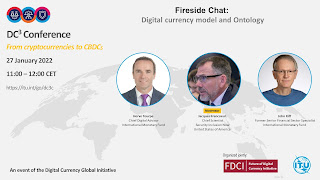
The International Telecommunication Union (ITU) is organizing the “DC3 Conference – From Cryptocurrencies to CBDCs” scheduled to take place virtually from January 25 – 27, 2022. The Digital Currency Conference is organized by the Digital Currency Global Initiative (DCGI) which is a joint collaboration between the ITU and the Future of Digital Currency Initiative at Stanford University. I’ll be part of a “fireside chat” on the DCGI’s digital currency ontology work. [Register here]
Kiffmeister’s #Fintech Daily Digest (01/19/2022)

China’s New Digital Yuan App Earns 4.5 Stars out of 5

The new Peoples Bank of China (PBOC) e-CNY app has scored a 4.4 out of 5 in China’s Apple App Store, and Richard Turrin, in his review, concurs (5 out of 5 actually). If the e-CNY is going to be accepted it’s got to bring something to the table in addition to what’s offered by Alipay and WeChat Pay, and Richard runs through the major new features that will be important enough that they’ll get some to change. These include:

  • Unlimited spending limits for e-CNY wallets that fulfill the highest level of know-your-customer (KYC), versus Alipay personal accounts that top out around RMB 20,000 (about $3,000).
  • The ability to set spending limits not just on the entire account but on all of the sub-wallets, a money management feature that the other payment platforms don’t have. 
  • Payments of less than RMB 2000 ($300) are anonymous! There is no equivalent for the other  payment platforms or even western credit cards.
Make sure to read the full post on LinkedIn and watch the video posted there to see the app at work. 

To get these updates sent to your inbox, please sign up here. Also, for those interested in intra-day updates and news that didn’t make the Daily Digest cut, please check out my Diigo fintech bookmarks: https://www.diigo.com/user/kiffmeister/Fintech.

Central Bank Digital Currency Workshop, hosted by the CBDC Think Tank 

The CBDC Think Tank (CBDCTT)  is hosting an in-person CBDC Workshop in Washington DC on February 24. It’s an intensive and hands-on CBDC course for central bank leadership and staff that are looking to understand and position for CBDCs. The workshop is a mix of lectures from CBDC experts and hands-on exercises. Certification of completion will be provided by the CBDCTT. Note that it is open only to staff from the official sector, such as central bank and finance ministry staff! [Register here]

Kiffmeister’s #Fintech Daily Digest (01/18/2022)

Binance Spoofy Bots Cause Mass Liquidations

Carol Alexander does a very thorough forensic analysis of the how price manipulation bots caused mass Binance Liquidations on July 26, 2021. She concludes that Binance doesn’t offer its clients sufficient protection against professional traders running market-making spoofing bots that would be against the law on properly regulated exchanges; and this manipulative activity on spills over to other exchanges so that Binance now presents a systemic risk to the entire crypto asset ecosystem. [Read more]

The Role of Binance in Bitcoin Volatility Transmission

Carol Alexander has also published a paper that found that the tether-margined perpetual contract on Binance (the culprit in the July 26, 2021 story) continuously transmits strong flows (and volatility) to all other instruments. It also found that (i) during US trading hours, traders pay more attention and are more reactive to prevailing market conditions when updating their expectations and (ii) the crypto market exhibits a higher interconnectedness when traditional Western stock markets are open. [Read more]

All of this implies that  regulators should not only consider spot exchanges offering bitcoin-fiat trading but also the tether-margined derivatives products available on most unregulated exchanges like Binance.

To get these updates sent to your inbox, please sign up here. Also, for those interested in intra-day updates and news that didn’t make the Daily Digest cut, please check out my Diigo fintech bookmarks: https://www.diigo.com/user/kiffmeister/Fintech.

Central Bank Digital Currency Workshop, hosted by the CBDC Think Tank 

The CBDC Think Tank (CBDCTT)  is hosting an in-person CBDC Workshop in Washington DC on February 24. It’s an intensive and hands-on CBDC course for central bank leadership and staff that are looking to understand and position for CBDCs. The workshop is a mix of lectures from CBDC experts and hands-on exercises. Certification of completion will be provided by the CBDCTT. Note that it is open only to staff from the official sector, such as central bank and finance ministry staff! [Register here]

Kiffmeister’s #Fintech Daily Digest (01/17/2022)

Region-Wide Service Interruption of ECCB DCash Platform

On January 14, the Eastern Caribbean Central Bank (ECCB) DCash central bank digital currency (CBDC) platform experienced an interruption in service that has affected all users. This break in service has been caused by a technical issue and the subsequent necessity for additional upgrades. Since the breakdown, no DCash transactions are being processed, but the ECCB is assuring users that all DCash wallet balances remain secure and unaffected. [Read more]

Malaysia’s Central Bank Studies Need for a Digital Currency

Bank Negara Malaysia “is actively assessing the value proposition of CBDC to Malaysia,” it said in an email to Bloomberg. “While a decision has not been made to issue CBDC, we have focused our research on CBDC via proof-of-concept and experimentation to enhance our technical and policy capabilities, should the need to issue CBDC arise in the future.” The central bank first signaled CBDC exploration intent in their 2020 annual report. [Read more]

Bitcoin’s Dominance of Crypto Payments Is Starting to Erode

Last year, Bitcoin’s use at merchants that use BitPay dropped to about 65% of processed payments, down from 92% in 2020. Ether purchases accounted for 15% of the total, stablecoins were 13% and new coins added to BitPay in 2021 — Dogecoin, Shiba Inu and Litecoin — accounted for 3%. The alternative coins’ use surged partly as more businesses have begun using stablecoins for cross-border payments. Also many investors may also have chosen to hold onto Bitcoin instead of spending it. [Read more]

MAS Bans Crypto Trading Platforms From Advertising in Public Areas

According to new Monetary Authority of Singapore (MAS) guidelines, crypto-asset service providers should not engage in marketing or advertising their services in public areas in Singapore such as through advertisements on public transport, public transport venues, public websites, social media platforms, broadcast and print media, or provision of physical ATMs. Also, they are also not allowed to promote their services through the engagement of third parties, such as social media influencers. [Read more]

To get these updates sent to your inbox, please sign up here. Also, for those interested in intra-day updates and news that didn’t make the Daily Digest cut, please check out my Diigo fintech bookmarks: https://www.diigo.com/user/kiffmeister/Fintech.

Central Bank Digital Currency Workshop, hosted by the CBDC Think Tank 

The CBDC Think Tank (CBDCTT)  is hosting an in-person CBDC Workshop in Washington DC on February 24. It’s an intensive and hands-on CBDC course for central bank leadership and staff that are looking to understand and position for CBDCs. The workshop is a mix of lectures from CBDC experts and hands-on exercises. Certification of completion will be provided by the CBDCTT. Note that it is open only to staff from the official sector, such as central bank and finance ministry staff! [Register here]

Kiffmeister’s #Fintech Daily Digest (01/16/2022)

North Korean Hackers Have Prolific Year

According to Chainalysis, North Korean cybercriminals launched at least seven attacks on cryptocurrency platforms in 2021 that extracted nearly $400 million worth of digital assets. These attacks targeted primarily investment firms and centralized exchanges, and made use of phishing lures, code exploits, malware, and advanced social engineering to siphon funds out of these organizations’ internet-connected “hot” wallets into DPRK-controlled addresses. Once they gained custody of the funds, the attackers began a careful laundering process to cover up and cash out. [Read more]

Bitfinex advises Ontario-based users to close accounts before March 1

Bitfinex said it would be immediately closing the accounts for Ontario-based customers who have no balances on the platform. In addition, it planned to restrict access to those who do not have open positions in the exchange’s peer-to-peer financing market or open margin positions. Ontario-based users who have balances or open positions on Bitfinex will no longer have access to any services starting on March 1. The exchange advised customers to withdraw funds before the effective date. [Read more]

To get these updates sent to your inbox, please sign up here. Also, for those interested in intra-day updates and news that didn’t make the Daily Digest cut, please check out my Diigo fintech bookmarks: https://www.diigo.com/user/kiffmeister/Fintech.

Central Bank Digital Currency Workshop, hosted by the CBDC Think Tank 

The CBDC Think Tank (CBDCTT)  is hosting an in-person CBDC Workshop in Washington DC on February 24. It’s an intensive and hands-on CBDC course for central bank leadership and staff that are looking to understand and position for CBDCs. The workshop is a mix of lectures from CBDC experts and hands-on exercises. Certification of completion will be provided by the CBDCTT. Note that it is open only to staff from central bank staff and finance ministries! [Register here]

Kiffmeister’s #Fintech Daily Digest (01/14/2022)

Central bank digital currencies: a solution in search of a problem?

A U.K. House of Lords committee has concluded that there is currently “no convincing case” for the Bank of England to issue central bank digital currency (CBDC). It found that “while a CBDC may provide some advantages, it could present significant challenges for financial stability and the protection of privacy.” The committee chair said that the potential benefits of a CBDC are currently “overstated or achievable through less risky alternatives.” Nevertheless, the report recommended that U.K. authorities continue to work with international partners on CBDC principles and standards while learning lessons on technical design and usage from the experiences of countries that introduce a CDBC, in case consumer payment preferences, technological developments and the choices of other countries enhance the case for a U.K. CBDC in the future. [Read more]

Musk says Tesla to accept dogecoin for merchandise

Elon Musk tweeted that Tesla will accept meme-based cryptocurrency dogecoin as payment for its merchandise such as the “Giga Texas” belt buckle and mini models of electric vehicles. The move, which sent dogecoin prices 14% higher, comes a month after Musk said Tesla would test out the digital token as a payment option. [Read more]

Centrale Bank van Curaçao en Sint Maarten implements instant payments

The Centrale Bank van Curaçao en Sint Maarten, working with Worldline and the local commercial banks, has implemented the basic infrastructure for dual currency instant payments. As of January 15, 2022, all US dollar and Netherlands Antillean guilder interbank payments in and between Curaçao and Sint Maarten and in Bonaire will be processed within ten seconds 24/7. [Read more]

To get these updates sent to your inbox, please sign up here. Also, for those interested in intra-day updates and news that didn’t make the Daily Digest cut, please check out my Diigo fintech bookmarks: https://www.diigo.com/user/kiffmeister/Fintech.

Central Bank Digital Currency Workshop, hosted by the CBDC Think Tank 

The CBDC Think Tank (CBDCTT)  is hosting an in-person CBDC Workshop in Washington DC on February 24. It’s an intensive and hands-on CBDC course for central bank leadership and staff that are looking to understand and position for CBDCs. The workshop is a mix of lectures from CBDC experts and hands-on exercises. Certification of completion will be provided by the CBDCTT. Note that it is open only to staff from central bank staff and finance ministries! [Register here]

Kiffmeister’s #Fintech Daily Digest (01/13/2022)

Derivatives are coming to Coinbase, following purchase of FairX

Coinbase intends to enter the derivatives trading markets, having acquired the FairX derivatives exchange. FairX is a Designated Contract Market derivatives exchange regulated by the Commodity Futures Trading Commission. FairX only launched in May 2021, but it has already secured brokerage partnerships with TD Ameritrade and E*Trade, and 18 others. Coinbase said the acquisition is a “key stepping stone on Coinbase’s path to offer crypto derivatives to retail and institutional customers in the US.” [Read more]

Central bank digital currencies (CBDCs) in Latin America and the Caribbean

The Bank for International Settlements (BIS) published a paper that examines the views toward CBDCs Latin American and Caribbean (LAC) region central banks , drawing on their responses to a survey conducted by the BIS in late 2020 and early 2021. It also examines whether the engagement of LAC central banks with CBDCs can be explained by the structural characteristics of their economies. Thirdly, it reviews the long list of potential benefits, costs and risks of CBDCs, focusing on their relevance to the LAC economies. Finally, the paper reviews the design choices that central banks face and the actual choices made by a number of central banks in the region. [Read more]

BIS, SNB and SIX successfully test integration of wCBDC settlement with commercial banks

The BIS, the Swiss National Bank and SIX successfully tested the integration of wholesale (wCBDC) settlement with the core banking systems of five commercial banks. The experiment explored the settlement of interbank, monetary policy and cross-border transactions on the test systems of SIX Digital Exchange, SIX Interbank Clearing (the Swiss real-time gross settlement system) and the core banking systems of Citi, Credit Suisse, Goldman Sachs, Hypothekarbank Lenzburg and UBS. The test was part of Project Helvetia, an ongoing investigation into the settlement of tokenised assets with wholesale CBDC. [Read more]

Visa Partners With ConsenSys to Help Bridge CBDCs With Traditional Finance

Visa has teamed up with Ethereum scaling firm ConsenSys to help central bank digital currency (CBDC) networks bridge the gap with traditional financial institutions. Visa has created a CBDC Payments Module to serve as an on-ramp for CBDCs to existing payment networks. Banks and issuer processors will be able to plug into the module and integrate their existing infrastructure. Customers will eventually be able to use their CBDC-linked Visa card or digital wallet anywhere that Visa is accepted globally. Visa is currently in the process of integrating the Module with the ConsenSys Codefi CBDC sandbox powered by ConsenSys Quorum. [Read more]

USDF Consortium Launches to Enable Banks to Mint USDF Stablecoins

The USDF Consortium, an association of FDIC-insured financial institutions, launched, with a mission to build a network of banks to further the adoption and interoperability of a bank-minted USDF stablecoin. USDF will be minted exclusively by U.S. banks and will be redeemable on a 1:1 basis for cash from a Consortium member bank. The Consortium’s founding bank members include New York Community Bank, NBH Bank, FirstBank, Sterling National Bank, and Synovus Bank. [Read more]

Funds Lost to DeFi Hacks More Than Doubled to $1.3B in 2021: Certik

Certik reported that the amount of money lost in decentralized financed (DeFi) project hacks more than doubled to $1.3 billion in 2021, with centralization the most common vulnerability. According to DefiLlama data, the total value locked (TVL) in DeFi protocols at end-2021 was $243.88 billion, up from $18.29 billion the year before, meaning the lost funds shrank to 0.5% of TVL last year from 2.78% in 2020. [Read more]

To get these updates sent to your inbox, please sign up here. Also, for those interested in intra-day updates and news that didn’t make the Daily Digest cut, please check out my Diigo fintech bookmarks: https://www.diigo.com/user/kiffmeister/Fintech.

Central Bank Digital Currency Workshop, hosted by the CBDC Think Tank 

The Central Bank Digital Currency Think Tank (CBDCTT)  is hosting an in-person CBDC Workshop in Washington DC on February 24. It’s an intensive and hands-on CBDC course for central bank leadership and staff that are looking to understand and position for CBDCs. The workshop is a mix of lectures from CBDC experts and hands-on exercises. Certification of completion will be provided by the CBDCTT. Note that it is open only to central bank staff and finance ministries! [Register here]

Kiffmeister’s #Fintech Daily Digest (01/12/2022)

Crypto Prices Move More in Sync With Stocks, Posing New Risks

An IMF blog post reports that amid greater adoption, the correlation of crypto-assets with traditional holdings like stocks has increased significantly, which limits their perceived risk diversification benefits and raises the risk of contagion across financial markets, according to new IMF research. [Read more]

Iran Is Creating Its Own Digital Currency

The Central Bank of Iran (CBI) will reportedly launch a central bank digital currency (CBDC) pilot after the Nowruz (Iranian New Year) holidays in March. CBI’s fintech subsidiary, Informatics Services Corporation, has developed the digital rial platform over the past two years and the CBI has prepared the infrastructure. [Read more] Another report said the CBDC will be launched after approval by the CBI’s Money and Credit Council, although “regulations to this effect have been finalized and approved by the CBI board of executives. [Read more]

Hong Kong Monetary Authority Issues Discussion Paper on Crypto Assets and Stablecoins

The Hong Kong Monetary Authority (HKMA) released a Discussion Paper that lays out its thinking on the regulatory approach for crypto assets, particularly payment-related stablecoins. Members of the public and the industry are welcome to submit their responses before March 31, 2022. [Read more]

To get these updates sent to your inbox, please sign up here. Also, for those interested in intra-day updates and news that didn’t make the Daily Digest cut, please check out my Diigo fintech bookmarks: https://www.diigo.com/user/kiffmeister/Fintech.

Central Bank Digital Currency Workshop, hosted by the CBDC Think Tank 

The Central Bank Digital Currency Think Tank (CBDCTT)  is hosting an in-person CBDC Workshop in Washington DC on February 24. It’s an intensive and hands-on CBDC course for central bank leadership and staff that are looking to understand and position for CBDCs. The workshop is a mix of lectures from CBDC experts and hands-on exercises. Certification of completion will be provided by the CBDCTT. Note that it is open only to central bank staff and finance ministries! [Register here]

Kiffmeister’s #Fintech Daily Digest (01/11/2022)

The Bank for International Settlements (BIS) updated its database of central bank digital currency (CBDC) projects. It’s very well organized and some of the updates have been incorporated into my real-time tabulation. I had some CBDC projects misclassified as “research” when they are actually undergoing proof-of-concept work (Hungary, Kazakhstan, Russia, Thailand). However, I question the inclusion of Venezuela’s Bolívar Digital since it seems that it was nothing more than a removal of zeros from the country’s currency. [Read more

Framework for Facilitating Small Value Digital Payments in Offline Mode

The Reserve Bank of India (RBI) has introduced a framework to enable small value digital payments in offline mode using cards, wallets, mobile devices, etc. in proximity (face to face) mode.  This followed pilot testing undertaken by some entities between September 2020 and July 2021. The upper limit of an offline payment transaction shall be ₹200. The total limit for offline transactions on a payment instrument shall be ₹2,000 at any point in time. Replenishment of used limit shall be allowed only in online mode with an Additional Factor of Authentication (AFA). The issuer shall send transaction alerts to users as soon as transaction details are received, implying that an online connection is required at some point, so it’s not a purely offline payment system. [Read more]

To get these updates sent to your inbox, please sign up here. Also, for those interested in intra-day updates and news that didn’t make the Daily Digest cut, please check out my Diigo fintech bookmarks: https://www.diigo.com/user/kiffmeister/Fintech.

Central Bank Digital Currency Workshop, hosted by the CBDC Think Tank 

The Central Bank Digital Currency Think Tank (CBDCTT)  is hosting an in-person CBDC Workshop in Washington DC on February 24. It’s an intensive and hands-on CBDC course for central bank leadership and staff that are looking to understand and position for CBDCs. The workshop is a mix of lectures from CBDC experts and hands-on exercises. Certification of completion will be provided by the CBDCTT. Note that it is open only to central bank staff and finance ministries! [Register here]

Kiffmeister’s #Fintech Daily Digest (01/10/2022)

Global CBDC Challenge 2021 Report

The Monetary Authority of Singapore published a summary of the results of the Global Central Bank Digital Currency (CBDC) Challenge conducted in partnership with the International Monetary Fund, World Bank, Asian Development Bank, United Nations , and the Organization for Economic Co-operation and Development. The Challenge was aimed at identifying and developing retail CBDC solutions that increase payment efficiencies, improve financial inclusion and support the broader digitalization drive in the economy. The report goes through the Challenges various phases and includes highlights of the solutions presented by the 15 finalists during the Singapore Fintech Festival 2021 in November 2021 at which the three winning entries were selected. [Read more]

Central Bank Digital Currency Workshop, hosted by the CBDC Think Tank 

The Central Bank Digital Currency Think Tank (CBDCTT)  is hosting an in-person CBDC Workshop in Washington DC on February 24. It’s an intensive and hands-on CBDC course for central bank leadership and staff that are looking to understand and position for CBDCs. The workshop is a mix of lectures from CBDC experts and hands-on exercises. Certification of completion will be provided by the CBDCTT. Note that it is open only to central bank staff and finance ministries! [Register here] It will be followed by a Digital Currency Conference that will focus on technology and design aspects rather than policy and functionality issues. 

Platform-based business models and financial inclusion

The Bank for International Settlements published a paper on digital platform economics. It found that digital platforms can dramatically lower costs and thereby aid financial inclusion – but these same features can give rise to digital monopolies and oligopolies. Digital platforms operate in multi-sided markets, and rely crucially on big data. This leads to specific network effects, returns to scale and scope, and policy trade-offs. To reap the benefits of platforms while mitigating risks, policy makers can: (i) apply existing financial, antitrust and privacy regulations, (ii) adapt old and adopt new regulations, combining an activity and entity-based approach, and/or (iii) provide new public infrastructures. The latter include digital identity, retail fast payment systems and CBDCs. These public infrastructures, as well as ex ante competition rules and data portability, are particularly promising. Yet to achieve their policy goals, the paper concludes that central banks and financial regulators need to coordinate with competition and data protection authorities. [Read more]

To get these updates sent to your inbox, please sign up here. Also, for those interested in intra-day updates and news that didn’t make the Daily Digest cut, please check out my Diigo fintech bookmarks: https://www.diigo.com/user/kiffmeister/Fintech.