Kiffmeister’s #Fintech Daily Digest (20240212)*

Remolona: Philippines to have CBDC in 2 years

The Governor of Bangko Sentral ng Pilipinas (BSP) reportedly expects to put in place within the next two years a wholesale central bank digital currency (CBDC). However, blockchain or distributed ledger technology (DLT) won’t be used, which brings into question whether it is a “wholesale CBDC”. Market convention defines a retail CBDC as being technology agnostic (it can be DLT-based or not), but it defines wholesale CBDC as being DLT-based. Otherwise, every non-DLT central bank-run digital payment system (e.g., real-time gross settlement systems) would be on the list of wholesale CBDC projects. [Read more at the Inquirer]

FYI here are some of my upcoming speaking engagements:

Digital Euro Conference 2024 (Frankfurt on February 29)[Register here and get a 20% discount with the Kiffmeister20 code]

*For those interested in intra-day updates, check out my searchable Diigo Fintech developments database, which is also a good place to go to query for past developments: https://www.diigo.com/user/kiffmeister/ART.

Kiffmeister’s central bank digital currency monthly monitor

Just a reminder that I produce a monthly digest of central bank digital currency (CBDC) developments exclusively for the official sector. So (only) if you work at a central bank, ministry of finance or international financial institution (e.g., the BIS, IMF, OECD, World Bank) and who would like to receive it by email on the first business day of every month, please DM me on LinkedIn or email me at chronicles@kiffmeister.com

The Sovereign Official Digital Association (SODA) is a technology-agnostic firm offering advisory services at the intersection of central banking, digital finance and the web3 industry, aiming to make public digital money a reality. SODA believes institutions in the existing financial ecosystem should have access to the tools and resources they need to move from discussion to action. SODA offers ‘real life’ use cases to help test digital money and drive adoption as central banks and other public institutions explore the future of a more financially inclusive world powered by interoperable blockchain-based networks. SODA would love you to join us on this journey – please get in touch (chris@sodapublicmoney.org).

Satoshi Capital Advisors is a New York-based, global advisory firm that works with central banks, governments, and the private sector to architect, implement, and operate varying initiatives. Satoshi Capital Advisors’ central bank work revolves around CBDC architecture and implementation, providing advisory services from research phase through to growth phase. Utilizing a product-market fit and technology agnostic approach to CBDC architecture and implementation enables Satoshi Capital Advisors to build tailored solutions, bespoke to local financial system nuances. Satoshi Capital Advisors welcomes requests from central bank officials for virtual and in-person CBDC workshops. [Click here for more information]

WhisperCash offers the first fully offline digital currency platform that has the same properties as physical cash. It can perform secure consecutive offline payments without compromising on security, privacy or accessibility. WhisperCash allows direct person to person offline payments without any server infrastructure or internet connectivity. It comes in various form factors including the self-contained credit card-sized “Pro” that sports an eInk screen and capacitive keyboard, and lasts for two weeks between recharges assuming a few transactions per day. [Click here for more information]

Kiffmeister’s #Fintech Daily Digest (20240209)*

Central bank digital currency and banking choices

The Bank of Canada (BOC) published a paper that uses a structural model where each household chooses which financial institution to deposit their digital money with to estimate the extent to which a central bank digital currency (CBDC) competes with bank deposits. It uses a unique Canadian dataset which contains information on households’ bank choices for a rich set of financial products. The paper finds that non-interest-bearing CBDC that does not provide complementary financial products can substantially crowd out bank deposits only if it provides an extensive service network. Also, a Canadian CBDC that uses post offices as service locations would benefit rural households more than a CBDC that uses bank branches as service locations. [Read more at the BOC]

Another area explored in the paper was limits on the amount of CBDC consumers can hold. With a C$25,000 ($18,500) holding limit, the paper’s model estimates that deposit switching to CBDC would be halved. They only expect this to impact 10% of households, but this group tends to have a large amount of liquid assets. [Read more at Ledger Insights]

FYI here are some of my upcoming speaking engagements:

Digital Euro Conference 2024 (Frankfurt on February 29)[Register here and get a 20% discount with the Kiffmeister20 code]

*For those interested in intra-day updates, check out my searchable Diigo Fintech developments database, which is also a good place to go to query for past developments: https://www.diigo.com/user/kiffmeister/ART.

Kiffmeister’s central bank digital currency monthly monitor

Just a reminder that I produce a monthly digest of central bank digital currency (CBDC) developments exclusively for the official sector. So (only) if you work at a central bank, ministry of finance or international financial institution (e.g., the BIS, IMF, OECD, World Bank) and who would like to receive it by email on the first business day of every month, please DM me on LinkedIn or email me at chronicles@kiffmeister.com

The Sovereign Official Digital Association (SODA) is a technology-agnostic firm offering advisory services at the intersection of central banking, digital finance and the web3 industry, aiming to make public digital money a reality. SODA believes institutions in the existing financial ecosystem should have access to the tools and resources they need to move from discussion to action. SODA offers ‘real life’ use cases to help test digital money and drive adoption as central banks and other public institutions explore the future of a more financially inclusive world powered by interoperable blockchain-based networks. SODA would love you to join us on this journey – please get in touch (chris@sodapublicmoney.org).

Satoshi Capital Advisors is a New York-based, global advisory firm that works with central banks, governments, and the private sector to architect, implement, and operate varying initiatives. Satoshi Capital Advisors’ central bank work revolves around CBDC architecture and implementation, providing advisory services from research phase through to growth phase. Utilizing a product-market fit and technology agnostic approach to CBDC architecture and implementation enables Satoshi Capital Advisors to build tailored solutions, bespoke to local financial system nuances. Satoshi Capital Advisors welcomes requests from central bank officials for virtual and in-person CBDC workshops. [Click here for more information]

WhisperCash offers the first fully offline digital currency platform that has the same properties as physical cash. It can perform secure consecutive offline payments without compromising on security, privacy or accessibility. WhisperCash allows direct person to person offline payments without any server infrastructure or internet connectivity. It comes in various form factors including the self-contained credit card-sized “Pro” that sports an eInk screen and capacitive keyboard, and lasts for two weeks between recharges assuming a few transactions per day. [Click here for more information]

Kiffmeister’s #Fintech Daily Digest (20240208)*

Indian CBDC pilot progresses to programmable, offline usage

The Reserve Bank of India (RBI) plans to add programmability and offline payments to its central bank digital currency (CBDC) pilot. “Programmability will facilitate transactions for specific/targeted purposes, while offline functionality will enable these transactions in areas with poor or limited internet connectivity.” It sounds like programmability will take the form of “purpose-bound money” that embeds (“bounds”) programming logic denoting its use based on programmed conditions that becomes “unbounded” once those conditions are met. [Read more at the RBI]

Bakkt warns it might not be able to remain in business

Bakkt, launched amid great fanfare in 2018 by Intercontinental Exchange, the owner of the New York Stock Exchange, warned that it might not be able to stay in business. Bakkt is a digital asset platform and payment app that enables institutions to buy, sell, store and spend crypto-assets. It made strategic partnerships, including with Starbucks and Amazon Web Services, to enable digital asset transactions and services. [Read more at CoinDesk]

HKMA proposes crypto reserve requirements for banks

The Hong Kong Monetary Authority (HKMA) published a consultation paper on proposed new regulations on the prudential treatment of crypto-asset exposures. It is intended to implement standards established by the Basel Committee on Banking Supervision (BCBS) that divide assets that use cryptography and distributed ledger technology (DLT) into four different categories based on risk and other factors that determine how much capital banks must hold in reserve (see below). Group 1a and 1b crypto-assets will basically be treated the same as their non-tokenized versions. Group 2a crypto-assets will face higher capital reserve requirements than group 1 assets, and for group 2b crypto-assets the requirements can be greater than the value of the assets themselves. [Read more at the HKMA]

FYI here are some of my upcoming speaking engagements:

Digital Euro Conference 2024 (Frankfurt on February 29)[Register here and get a 20% discount with the Kiffmeister20 code]

*For those interested in intra-day updates, check out my searchable Diigo Fintech developments database, which is also a good place to go to query for past developments: https://www.diigo.com/user/kiffmeister/ART.

Kiffmeister’s central bank digital currency monthly monitor

Just a reminder that I produce a monthly digest of central bank digital currency (CBDC) developments exclusively for the official sector. So (only) if you work at a central bank, ministry of finance or international financial institution (e.g., the BIS, IMF, OECD, World Bank) and who would like to receive it by email on the first business day of every month, please DM me on LinkedIn or email me at chronicles@kiffmeister.com

The Sovereign Official Digital Association (SODA) is a technology-agnostic firm offering advisory services at the intersection of central banking, digital finance and the web3 industry, aiming to make public digital money a reality. SODA believes institutions in the existing financial ecosystem should have access to the tools and resources they need to move from discussion to action. SODA offers ‘real life’ use cases to help test digital money and drive adoption as central banks and other public institutions explore the future of a more financially inclusive world powered by interoperable blockchain-based networks. SODA would love you to join us on this journey – please get in touch (chris@sodapublicmoney.org).

Satoshi Capital Advisors is a New York-based, global advisory firm that works with central banks, governments, and the private sector to architect, implement, and operate varying initiatives. Satoshi Capital Advisors’ central bank work revolves around CBDC architecture and implementation, providing advisory services from research phase through to growth phase. Utilizing a product-market fit and technology agnostic approach to CBDC architecture and implementation enables Satoshi Capital Advisors to build tailored solutions, bespoke to local financial system nuances. Satoshi Capital Advisors welcomes requests from central bank officials for virtual and in-person CBDC workshops. [Click here for more information]

WhisperCash offers the first fully offline digital currency platform that has the same properties as physical cash. It can perform secure consecutive offline payments without compromising on security, privacy or accessibility. WhisperCash allows direct person to person offline payments without any server infrastructure or internet connectivity. It comes in various form factors including the self-contained credit card-sized “Pro” that sports an eInk screen and capacitive keyboard, and lasts for two weeks between recharges assuming a few transactions per day. [Click here for more information]

Kiffmeister’s #Fintech Daily Digest (20240207)*

CBDC and monetary sovereignty

A chapter in a recently published European Central Bank (ECB) legal conference volume investigated the potential rationale for the introduction of a central bank digital currency (CBDC) to preserve monetary sovereignty. It concluded that the introduction of a CBDC as a protective measure when the currency substitution is caused by unfavorable economic conditions is neither effective nor appropriate for such purposes. And it identified only a very limited set of circumstances when the issuance of a CBDC might be appropriate to push back on the use of technologically superior foreign money. And more bluntly, it concluded that “a digital euro might help defend the monetary sovereignty of the euro area Member States by facilitating cross-border payments as a conduit, mitigating dependence on foreign infrastructure for pan-European payments, serving as a catalyst for the promotion of technologically new payment functionalities and offering a digital complement to cash. In its planned form, however, the digital euro is not (yet) fit for purpose. Its statutory privilege compared to cash and its holding limits will prevent it from fulfilling its anchoring function. Its issuance would thus weaken rather than strengthen the euro area’s monetary sovereignty in the long run.” [Read more at the ECB starting on page 165]

FYI here are some of my upcoming speaking engagements:

Digital Euro Conference 2024 (Frankfurt on February 29)[Register here and get a 20% discount with the Kiffmeister20 code]

*For those interested in intra-day updates, check out my searchable Diigo Fintech developments database, which is also a good place to go to query for past developments: https://www.diigo.com/user/kiffmeister/ART.

Kiffmeister’s central bank digital currency monthly monitor

Just a reminder that I produce a monthly digest of central bank digital currency (CBDC) developments exclusively for the official sector. So (only) if you work at a central bank, ministry of finance or international financial institution (e.g., the BIS, IMF, OECD, World Bank) and who would like to receive it by email on the first business day of every month, please DM me on LinkedIn or email me at chronicles@kiffmeister.com

The Sovereign Official Digital Association (SODA) is a technology-agnostic firm offering advisory services at the intersection of central banking, digital finance and the web3 industry, aiming to make public digital money a reality. SODA believes institutions in the existing financial ecosystem should have access to the tools and resources they need to move from discussion to action. SODA offers ‘real life’ use cases to help test digital money and drive adoption as central banks and other public institutions explore the future of a more financially inclusive world powered by interoperable blockchain-based networks. SODA would love you to join us on this journey – please get in touch (chris@sodapublicmoney.org).

Satoshi Capital Advisors is a New York-based, global advisory firm that works with central banks, governments, and the private sector to architect, implement, and operate varying initiatives. Satoshi Capital Advisors’ central bank work revolves around CBDC architecture and implementation, providing advisory services from research phase through to growth phase. Utilizing a product-market fit and technology agnostic approach to CBDC architecture and implementation enables Satoshi Capital Advisors to build tailored solutions, bespoke to local financial system nuances. Satoshi Capital Advisors welcomes requests from central bank officials for virtual and in-person CBDC workshops. [Click here for more information]

WhisperCash offers the first fully offline digital currency platform that has the same properties as physical cash. It can perform secure consecutive offline payments without compromising on security, privacy or accessibility. WhisperCash allows direct person to person offline payments without any server infrastructure or internet connectivity. It comes in various form factors including the self-contained credit card-sized “Pro” that sports an eInk screen and capacitive keyboard, and lasts for two weeks between recharges assuming a few transactions per day. [Click here for more information]

Kiffmeister’s #Fintech Daily Digest (20240206)*

Issuing a wholesale central bank digital currency: Why and how

Intereconomics published a paper by Christian Pfister on the whys and hows of issuing distributed ledger technology (DLT) based wholesale central bank digital currency (CBDC). The whys focus on the provision of a safe and liquid settlement instrument that would be directly available in a DLT environment, thus preserving the anchoring role of central bank money in this environment. The hows focus on the potential perimeter of the use of wholesale CBDC (e.g., whether to integrate with a “regulated liabilities network) , the consequences for monetary policy and precautions central banks should take. [Read more at Intereconomics]

Tracing the adoption of digital technologies

The Bank for International Settlements (BIS) published a paper that uses a structural model of consumer demand and supply to understand the main drivers of adoption of smartphones in emerging markets. It finds that the most important factors are improvements in quality and changes in the income distribution of the population. A 10% expansion in the size of the smartphone market can be achieved by reducing the value added tax by 9 percentage points. The same adoption target can also be achieved by providing lower-income individuals with a targeted subsidy for smartphones. [Read more at the BIS]

FYI here are some of my upcoming speaking engagements:

Digital Euro Conference 2024 (Frankfurt on February 29)[Register here and get a 20% discount with the Kiffmeister20 code]

*For those interested in intra-day updates, check out my searchable Diigo Fintech developments database, which is also a good place to go to query for past developments: https://www.diigo.com/user/kiffmeister/ART.

Kiffmeister’s central bank digital currency monthly monitor

Just a reminder that I produce a monthly digest of central bank digital currency (CBDC) developments exclusively for the official sector. So (only) if you work at a central bank, ministry of finance or international financial institution (e.g., the BIS, IMF, OECD, World Bank) and who would like to receive it by email on the first business day of every month, please DM me on LinkedIn or email me at chronicles@kiffmeister.com

The Sovereign Official Digital Association (SODA) is a technology-agnostic firm offering advisory services at the intersection of central banking, digital finance and the web3 industry, aiming to make public digital money a reality. SODA believes institutions in the existing financial ecosystem should have access to the tools and resources they need to move from discussion to action. SODA offers ‘real life’ use cases to help test digital money and drive adoption as central banks and other public institutions explore the future of a more financially inclusive world powered by interoperable blockchain-based networks. SODA would love you to join us on this journey – please get in touch (chris@sodapublicmoney.org).

Satoshi Capital Advisors is a New York-based, global advisory firm that works with central banks, governments, and the private sector to architect, implement, and operate varying initiatives. Satoshi Capital Advisors’ central bank work revolves around CBDC architecture and implementation, providing advisory services from research phase through to growth phase. Utilizing a product-market fit and technology agnostic approach to CBDC architecture and implementation enables Satoshi Capital Advisors to build tailored solutions, bespoke to local financial system nuances. Satoshi Capital Advisors welcomes requests from central bank officials for virtual and in-person CBDC workshops. [Click here for more information]

WhisperCash offers the first fully offline digital currency platform that has the same properties as physical cash. It can perform secure consecutive offline payments without compromising on security, privacy or accessibility. WhisperCash allows direct person to person offline payments without any server infrastructure or internet connectivity. It comes in various form factors including the self-contained credit card-sized “Pro” that sports an eInk screen and capacitive keyboard, and lasts for two weeks between recharges assuming a few transactions per day. [Click here for more information]

Kiffmeister’s #Fintech Daily Digest (20240203)*

ASAP: A conceptual model for digital asset platforms

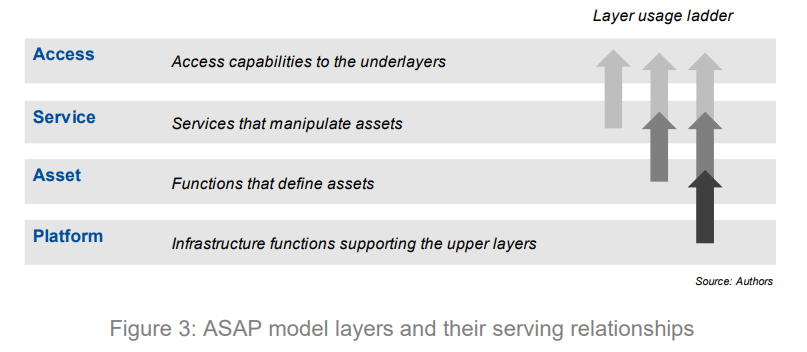
The IMF published a paper that introduces, and illustrates the use of, the ASAP (access, service, asset, platform) digital asset platforms (DAP) conceptual model. Just as the utilization of a seven-layer TCP/IP model has been fundamental to the interoperability of the internet, it is anticipated that the four-layer ASAP DAP model will similarly promote cross-platform and cross-border interoperability. The model is illustrated through examples and use cases, such as asset tokenization and the concept of purpose bound money (PBM) being explored by the Monetary Authority of Singapore (MAS). [Read more at the IMF]

Ethereum’s diversification problem

Bloomberg has recently brought attention to the Ethereum’s validation network’s over-dependence on the Geth software client that nearly 80% of validators depend on to keep the network running. Coinbase, Binance and Kraken, who are among the validators who rely solely on Geth for their Ethereum services, operate a staking-as-a-service business model, whereby customers give them their tokens to lock up on Ethereum on their behalf. Concerns have been sparked since recently less-used Nethermind crashed for a few hours, and Coinbase and Kraken are now both exploring new smaller clients for their platforms. [Read more at Bloomberg]

Is Schumpeter right? Fintech and economic growth

The IMF published a paper that investigate the relationship between fintech and economic growth in a panel of 198 countries over the period 2012–2020. It finds that digital lending has a statistically significant positive effect on economic growth, whereas digital capital raising has a large but insignificant effect. And while the positive relationship between fintech and growth is stronger in magnitude in advanced economies, the statistical significance of this effect is higher in developing countries. [Read more at the IMF]

FYI here are some of my upcoming speaking engagements:

Digital Euro Conference 2024 (Frankfurt on February 29)[Register here and get a 20% discount with the Kiffmeister20 code]

*For those interested in intra-day updates, check out my searchable Diigo Fintech developments database, which is also a good place to go to query for past developments: https://www.diigo.com/user/kiffmeister/ART.

Kiffmeister’s central bank digital currency monthly monitor

Just a reminder that I produce a monthly digest of central bank digital currency (CBDC) developments exclusively for the official sector. So (only) if you work at a central bank, ministry of finance or international financial institution (e.g., the BIS, IMF, OECD, World Bank) and who would like to receive it by email on the first business day of every month, please DM me on LinkedIn or email me at chronicles@kiffmeister.com

The Sovereign Official Digital Association (SODA) is a technology-agnostic firm offering advisory services at the intersection of central banking, digital finance and the web3 industry, aiming to make public digital money a reality. SODA believes institutions in the existing financial ecosystem should have access to the tools and resources they need to move from discussion to action. SODA offers ‘real life’ use cases to help test digital money and drive adoption as central banks and other public institutions explore the future of a more financially inclusive world powered by interoperable blockchain-based networks. SODA would love you to join us on this journey – please get in touch (chris@sodapublicmoney.org).

Satoshi Capital Advisors is a New York-based, global advisory firm that works with central banks, governments, and the private sector to architect, implement, and operate varying initiatives. Satoshi Capital Advisors’ central bank work revolves around CBDC architecture and implementation, providing advisory services from research phase through to growth phase. Utilizing a product-market fit and technology agnostic approach to CBDC architecture and implementation enables Satoshi Capital Advisors to build tailored solutions, bespoke to local financial system nuances. Satoshi Capital Advisors welcomes requests from central bank officials for virtual and in-person CBDC workshops. [Click here for more information]

WhisperCash offers the first fully offline digital currency platform that has the same properties as physical cash. It can perform secure consecutive offline payments without compromising on security, privacy or accessibility. WhisperCash allows direct person to person offline payments without any server infrastructure or internet connectivity. It comes in various form factors including the self-contained credit card-sized “Pro” that sports an eInk screen and capacitive keyboard, and lasts for two weeks between recharges assuming a few transactions per day. [Click here for more information]

Kiffmeister’s #Fintech Daily Digest (20240202)*

FYI I’ve updated my tabulations of retail and wholesale central bank digital currency (CBDC) projects. Click here for the retail CBDC update and here for the distributed ledger technology wholesale CBDC one.

More banks joining the Bank of Russia CBDC pilot

17 banks are gearing up to join the Bank of Russia’s digital ruble pilot program. They have already signed an agreement with the central bank and are now implementing the necessary systems to participate in the upcoming expanded pilot. Currently, 13 banks are already participating in the pilot, along with around 600 citizens and 30 trading and service companies. [Read more at the Bank of Russia]

11 states have pending anti-CBDC legislation

13 U.S. states have now passed, or may soon pass, anti-CBDC legislation. Some are aimed at preventing the state from accepting CBDC as payment, and many many additionally block participation in CBDC trials. Others are excluding CBDC from the definition of money in the Uniform Commercial Code (UCC) so businesses can’t use CBDC to discharge liabilities. [Read more at Ledger Insights]

US legislators aim to unblock bank crypto custody by cancelling SEC rule SAB 121

Lawmakers in both the U.S. House and the Senate have taken formal steps to reverse the Securities and Exchange Commission’s (SEC’s) Staff Accounting Bulletin (SAB) 121, which makes providing crypto-asset custody services prohibitively expensive for banks. SAB 121 rule forces all listed companies, including banks, to disclose crypto-assets under custody as both an asset and a liability on the balance sheet, which is not the standard accounting treatment, because the assets don’t belong to the company. Even the Federal Reserve Chair, Jerome Powell, has acknowledged the SAB 121 treatment is “unconventional”. This rule is especially problematic for U.S. banks because they are subject to capital requirements based on their balance sheet. [Read more at Ledger Insights]

FYI here are some of my upcoming speaking engagements

Digital Euro Conference 2024 (Frankfurt on February 29)[Register here and get a 20% discount with the Kiffmeister20 code]

*For those interested in intra-day updates, check out my searchable Diigo Fintech developments database, which is also a good place to go to query for past developments: https://www.diigo.com/user/kiffmeister/ART.

Kiffmeister’s central bank digital currency monthly monitor

Just a reminder that I produce a monthly digest of central bank digital currency (CBDC) developments exclusively for the official sector. So (only) if you work at a central bank, ministry of finance or international financial institution (e.g., the BIS, IMF, OECD, World Bank) and who would like to receive it by email on the first business day of every month, please DM me on LinkedIn or email me at chronicles@kiffmeister.com

The Sovereign Official Digital Association (SODA) is a technology-agnostic firm offering advisory services at the intersection of central banking, digital finance and the web3 industry, aiming to make public digital money a reality. SODA believes institutions in the existing financial ecosystem should have access to the tools and resources they need to move from discussion to action. SODA offers ‘real life’ use cases to help test digital money and drive adoption as central banks and other public institutions explore the future of a more financially inclusive world powered by interoperable blockchain-based networks. SODA would love you to join us on this journey – please get in touch (chris@sodapublicmoney.org).

Satoshi Capital Advisors is a New York-based, global advisory firm that works with central banks, governments, and the private sector to architect, implement, and operate varying initiatives. Satoshi Capital Advisors’ central bank work revolves around CBDC architecture and implementation, providing advisory services from research phase through to growth phase. Utilizing a product-market fit and technology agnostic approach to CBDC architecture and implementation enables Satoshi Capital Advisors to build tailored solutions, bespoke to local financial system nuances. Satoshi Capital Advisors welcomes requests from central bank officials for virtual and in-person CBDC workshops. [Click here for more information]

WhisperCash offers the first fully offline digital currency platform that has the same properties as physical cash. It can perform secure consecutive offline payments without compromising on security, privacy or accessibility. WhisperCash allows direct person to person offline payments without any server infrastructure or internet connectivity. It comes in various form factors including the self-contained credit card-sized “Pro” that sports an eInk screen and capacitive keyboard, and lasts for two weeks between recharges assuming a few transactions per day. [Click here for more information]
Kiffmeister’s #Fintech Daily Digest (20240201)*

Offline payments for smartphones

Crunchfish published a paper by Lipis Advisors on the challenges of implementing offline payments on smartphones and how to mitigate the risks. Offline payments require a much higher security than what is offered by the smartphone rich execution environment (REE). This higher level of security may be achieved by implementing offline payments as a trusted application (TA) protected by a tamper-resistant element (TRE) that provides a secure runtime and storage for both cryptographic keys and other offline assets, such as the offline balance and risk rules. The TRE can be provided either as a hardware-based standalone TRE or a software-based app-integrated TRE, the trade-off being the higher security of the former versus the greater scalability of the latter. [Read more at Crunchfish]

CBDC and the banking system

Banca D’Italia published a paper on the channels through which the introduction of a central bank digital currency (CBDC) may affect the banking system and the economy at large. The paper also provides a set of illustrative exercises about the potential impact of a CBDC on the funding structure and profitability of banks using data on the Italian banking system between June 2021 and March 2023. It finds that the impact depends on how credit institutions re-optimize their balance sheets in response to the outflow of deposits induced by the CBDC. It finds that the potential impact could be manageable if there were individual holding limits and the CBDC were introduced in an environment characterized by ample liquidity and stable funding for banks. [Read more at Banca D’Italia]

CBDC and bank lending: The role of financial frictions

Fernando Cirelli (Columbia University) and Remo Nyffenegger (University of Basel) posted a paper that examines the impact of CBDC on bank lending, emphasizing the role of different financial frictions. “Within a stylized general equilibrium model, we integrate a banking sector characterized by market power on deposits and leverage constraints, together with liquidity in households’ utility. Calibrating the model to US data and simulating a CBDC introduction as a shift in households’ preferences for public money, our results indicate that a CBDC increases bank lending when market power is the primary operating friction in the banking sector. However, this outcome reverses when leverage constraints are binding for banks.” [Read more on SSRN]

The impact of a digital euro on financial stability and consumer welfare

From the European Banking Federation (EBF) comes another paper that examines the impact of CBDC on bank deposit outflows, this one focusing on different digital euro holding limits . It confirmed that the higher the limit, the greater the outflows, with smaller banks being the most vulnerable, and the effect greater when the banking system is under stress. [Read more at the EBF]

Market structure of crypto-asset exchanges: Challenges and trends

The Bank of Canada published a paper that provides an overview of crypto exchanges, contrasting their design with exchanges in traditional financial markets and discussing emerging regulatory trends and innovations aimed at solving the problems crypto-asset exchanges face. It draws particular attention to the “vast amounts” of crypto-assets that crypto exchanges hold on their users’ behalf, “exposing users to continued losses from hacks, price dislocations and the whims of exchanges and third-party processors. The paper also points to important regulatory and oversight gaps between crypto exchanges and the infrastructure that supports traditional financial markets. [Read more at the Bank of Canada]

FYI here are some of my upcoming speaking engagements:

Digital Euro Conference 2024 (Frankfurt on February 29)[Register here and get a 20% discount with the Kiffmeister20 code]

*For those interested in intra-day updates, check out my searchable Diigo Fintech developments database, which is also a good place to go to query for past developments: https://www.diigo.com/user/kiffmeister/ART.

Kiffmeister’s central bank digital currency monthly monitor

Just a reminder that I produce a monthly digest of central bank digital currency (CBDC) developments exclusively for the official sector. So (only) if you work at a central bank, ministry of finance or international financial institution (e.g., the BIS, IMF, OECD, World Bank) and who would like to receive it by email on the first business day of every month, please DM me on LinkedIn or email me at chronicles@kiffmeister.com

The Sovereign Official Digital Association (SODA) is a technology-agnostic firm offering advisory services at the intersection of central banking, digital finance and the web3 industry, aiming to make public digital money a reality. SODA believes institutions in the existing financial ecosystem should have access to the tools and resources they need to move from discussion to action. SODA offers ‘real life’ use cases to help test digital money and drive adoption as central banks and other public institutions explore the future of a more financially inclusive world powered by interoperable blockchain-based networks. SODA would love you to join us on this journey – please get in touch (chris@sodapublicmoney.org).

Satoshi Capital Advisors is a New York-based, global advisory firm that works with central banks, governments, and the private sector to architect, implement, and operate varying initiatives. Satoshi Capital Advisors’ central bank work revolves around CBDC architecture and implementation, providing advisory services from research phase through to growth phase. Utilizing a product-market fit and technology agnostic approach to CBDC architecture and implementation enables Satoshi Capital Advisors to build tailored solutions, bespoke to local financial system nuances. Satoshi Capital Advisors welcomes requests from central bank officials for virtual and in-person CBDC workshops. [Click here for more information]

WhisperCash offers the first fully offline digital currency platform that has the same properties as physical cash. It can perform secure consecutive offline payments without compromising on security, privacy or accessibility. WhisperCash allows direct person to person offline payments without any server infrastructure or internet connectivity. It comes in various form factors including the self-contained credit card-sized “Pro” that sports an eInk screen and capacitive keyboard, and lasts for two weeks between recharges assuming a few transactions per day. [Click here for more information]