Kiffmeister’s #Fintech Daily Digest (06/08/2021)*

The Marshall Islands SOV Deconstructed

At first glance, the Marshall Island’s SOV scheme seems like a great way to raise government revenue. However, a closer look at it reveals that, like most things that sound too good to be true, it is. 

Colonial Hackers Broke the Fundamental Bitcoin Rule

The price of Bitcoin has fallen back into the low $30,000 range amid news that US federal authorities have recovered some of the Bitcoin paid by Colonial Pipeline to resolve a ransomware attack that shut down the East Coast oil pipeline for nearly a week in early May. Colonial paid $4.4 million in Bitcoin to take back control of its systems. Deputy FBI Director Paul Abbate said the bureau seized the money from a Bitcoin wallet that DarkSide ransomware actors used to collect the payment from Colonial Pipeline. There were unfounded rumors that the attackers’ bitcoin wallet had been “hacked” which is an unlikely scenario. Basically the ransom hackers used a rented cloud server, the FBI got a subpoena and took control of it and recovered coins. 

Future-proofing Hong Kong for Central Bank Digital Currencies

The Hong Kong Monetary Authority (HKMA) will strengthen its research work to increase Hong Kong’s readiness in issuing CBDCs at both wholesale and retail levels. In addition to the continued effort on wholesale CBDCs, the HKMA has been working with the Bank for International Settlements (BIS) Innovation Hub Hong Kong Centre to research retail CBDCs and will begin a study on e-HKD to understand its use cases, benefits, and related risks. The HKMA will also continue to collaborate with the People’s Bank of China in supporting the technical testing of e-CNY in Hong Kong with a view to providing a convenient means of cross-boundary payments for both domestic and mainland residents. 

Basel Committee agrees to  a public consultation on crypto-assets

The Basel Committee agreed to hold a public consultation to seek the views of external stakeholders on the design of prudential treatment of banks’ exposures to crypto-assets. This builds on an earlier discussion paper and the responses received from a broad range of stakeholders, and ongoing initiatives under way at other global forums and standard-setting bodies. The consultation paper will be published this week. The Basel Committee is the primary global standard setter for the prudential regulation of banks and provides a forum for cooperation on banking supervisory matters. 

Broadening Narrow Money: Monetary Policy with a Central Bank Digital Currency

This paper jointly written by Bank of England and Bank for International Settlements staff, discusses central bank digital currency (CBDC) and its potential impact on the monetary transmission mechanism. It first offers a general definition of CBDC which should make the concept accessible to a wide range of economists and policy practitioners. It then investigates how CBDC could affect the various stages of transmission, from markets for central bank money to the real economy. It concludes that monetary policy would be able to operate much as it does now, by varying the price or quantity of central bank money. Transmission may even be strengthened for a given change in policy instruments. 

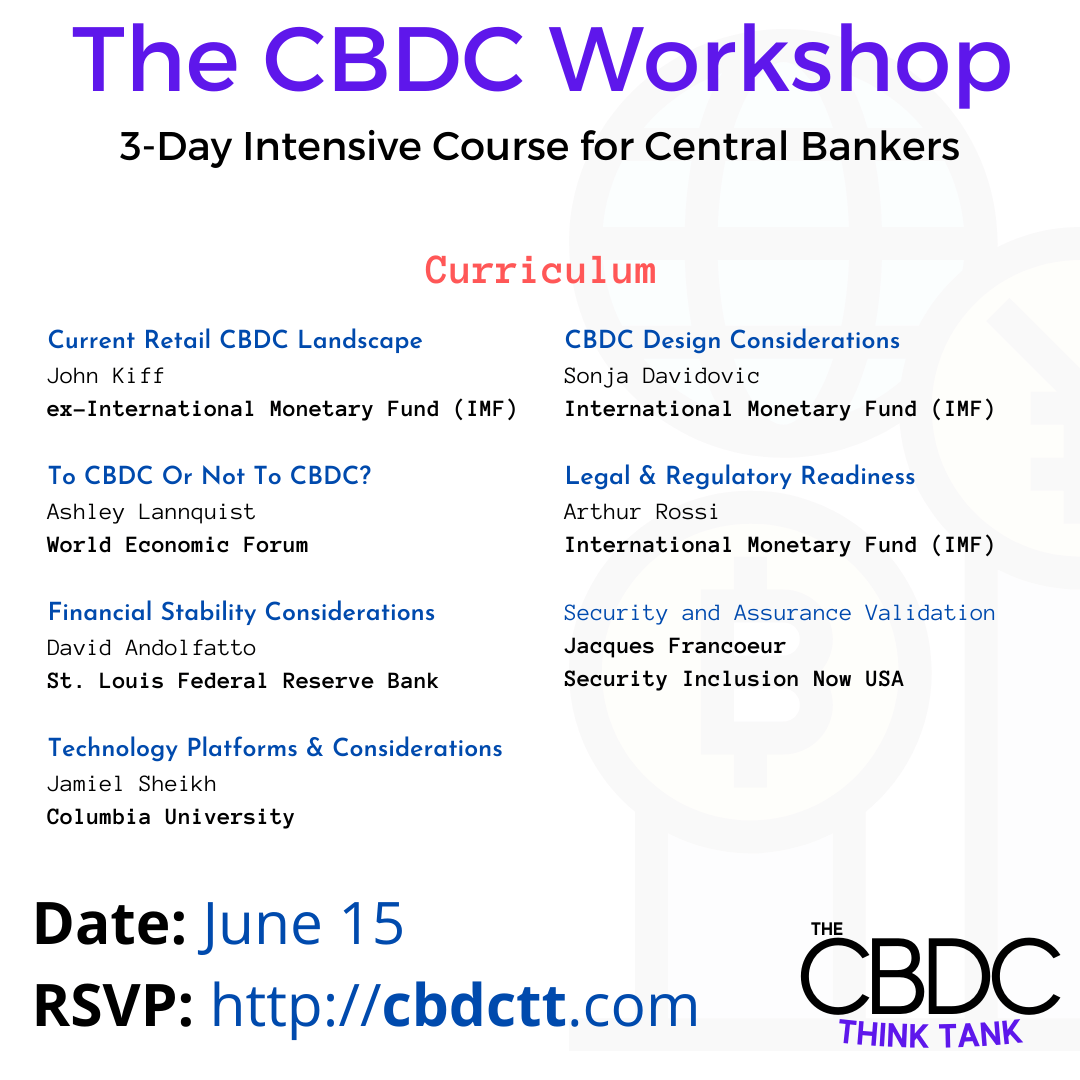
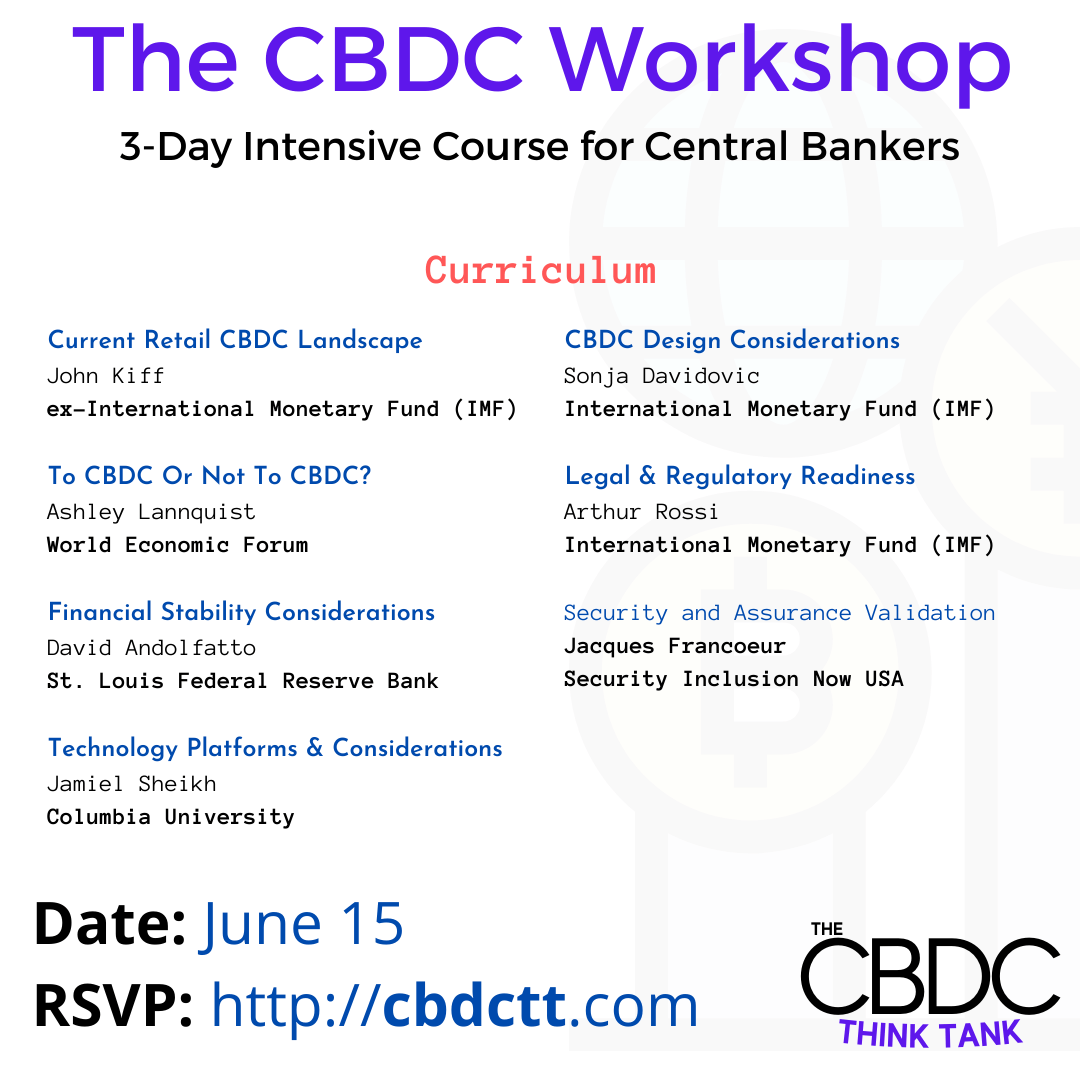
Central bankers can sign up here: https://www.eventbrite.com/e/the-central-bank-digital-currency-workshop-tickets-152572742179

*For those interested in intra-day updates and news that didn’t make the Daily Digest cut, please check out my Diigo fintech bookmarks: https://www.diigo.com/user/kiffmeister/Fintech
The Marshall Islands SOV Deconstructed

In 2018, the Republic of Marshall Islands (RMI) parliament passed the Sovereign Currency Act 2018 (the SOV Act), which established the digital currency Sovereign (SOV) as second legal tender in addition to the US dollar based. As legal tender, the SOV would be able to be used for any purchases as well as all payments of debt and tax obligations. Pursuant to this law, the SOV would be issued by the Ministry of Finance and would be non-redeemable. It was to be introduced via an initial coin offering (ICO), which the appointed organizer – SFB Technologies was tasked to perform. The law also requires transparency over the identity of the SOV users. The SOV would be issued on the Algorand blockchain.

One main purpose of the SOV is to generate revenue for the government. Additional motivations expand financial inclusion and improve RMI’s access to the global digital financial system.

After the initial issuance through an ICO, the number of SOV units would grow by 4 percent per year coded into the blockchain independently of the demand for the currency. Half of the revenue from the initial issuance (24 million SOVs) would be allocated to SFB Technologies and the other half to the RMI government. SFB technologies is tasked with developing and implementing the SOV and would bear all the necessary costs to issue the SOV and perform the ICO.

SFB technologies was planning on organizing a pre-sale of rights to future SOV units, with an eye to “test the markets and technology” and to gather additional information that could inform the government’s decision whether to proceed with the launch of the SOV. The pre-sale as currently conceived is independent of the RMI government and is designed as a private sale.

At a first glance, this arrangement sounds great, but a closer look reveals that it sounds too good to be true. Let us deconstruct the statements above to figure out where the SOV’s fatal flaws lie.

First, introducing the SOV would imply that the RMI would move to a dual currency system. In the absence of a monetary policy framework and a central bank this would impose significant risks to macroeconomic, monetary, and financial stability. The fixed annual growth rate of 4 percent irrespective of the demand for the currency would lead to large fluctuations in the value of the SOV against other currencies, including the U.S. dollar, the primary legal tender. These fluctuations, in turn, could create incentives for households, firms, and visitors to hoard the more stable/appreciating legal tender, while discharging debts and other obligations, including tax obligations, in the depreciating legal tender. This could have serious adverse consequences for the RMI’s public finances. Also, given that the RMI does not have a central bank, the country would effectively outsource its monetary policy to a private sector party creating a strong dependency.

Second, SFB technologies is foreign start-up with limited financial sector experience. The company’s intention was to seek financial support from potential investors to finalize the design of the SOV highlighting the immaturity of their technical concept. Also, SFB technologies’ dual role of issuer and private investor may create the appearance of a conflict of interest.

Third, based on the SOV’s issuance through an ICO as a way of raising revenue can be considered a securities offering. As there is no securities regulation governing either the pre-sale or the actual issuance, the RMI exposes itself to a regulatory vacuum unable to thwart or respond to potential fraud and manipulation.

Fourth, the identity of SOV users is expected to be verified through licensed international exchanges. However, licensing exchanges that will list the SOV is a mammoth task that may exceed this small country’s existing regulatory capacities. Moreover, although the exchanges are responsible for identity verification and establishing white and black lists for financial integrity purposes, the RMI government would still have to manage those lists as well as monitor and enforce compliance. Given the weakness of the country’s anti-money laundering (AML) and counter-terrorism financing (CFT) regime and capacity constraints within the regulatory and supervisory agencies, it remains questionable whether financial integrity risks can be mitigated adequately. The Digital Economic Zone for the exchange of virtual assets would only exacerbate the financial integrity issues.   

Fifth, the stated goal behind the SOV is to raise revenue for the government to offset the fallout from revenue from the reduction of the U.S. Compact grants after 2023. However, there is no indication how much revenue the SOV issuance would generate. For revenue to be sizeable, there would need to be strong demand for SOV by foreigners. This seems difficult given the strong competition from existing crypto assets. In addition, through the SOV issuance, the small economy’s revenues would be subject to global crypto market price volatility.

Finally, the country’s frequent power and network outages could hamper the issuance and wide-spread use of the SOV, obstructing the goal to achieve financial inclusion and impeding the country’s access to the global digital financial system. More importantly, the SOV issuance could jeopardize the country’s last U.S. corresponding banking relationship with First Hawaiian Bank exacerbating the RMI’s access to global financial networks.

It is easy to get blinded by the promise of enormous revenue from a state-backed crypto-asset like the SOV especially considering impending revenue fallouts. But issuing, managing and sustainably maintaining a crypto-asset designated as legal tender is a complex endeavor and requires important prerequisites such as an adequate legal and regulatory framework, sufficient capacity to supervise and regulate the SOV as well as the security of the underlying system and a viable digital infrastructure. Rather than embarking on a project of this magnitude and complexity, the Marshallese could consider other options such as rationalizing public spending which is the highest in the Pacific region to unlock extra revenue, lean on regulated stablecoin or e-money providers to expand access to finance, work with development partners such as the World Bank or the Asian Development Bank to expand the country’s core infrastructure and request technical assistance to enhance the country’s legal and regulatory regime.

The government is now considering to repeal the SOV Act and a bill on establishing a Digital Economic Zone was submitted to the Parliament recently.

Kiffmeister’s #Fintech Daily Digest (06/07/2021)*

Responses to the Bank of England’s March 2020 Discussion Paper on CBDC

The Bank of England published the feedback it received on the “Central Bank Digital Currency: Opportunities, Challenges and Design” discussion paper that was published in March 2020. In short, the feedback is encouraging the Bank to continue examining the case for a CBDC. But at the same time, the it received clear feedback that the use case for a CBDC, which might justify its introduction, needed further research, refinement, and articulation, to inform a comprehensive assessment of the pros and cons of what would be a major decision. Additionally, some respondents expressed doubt that a CBDC was needed at all, given they considered that the intended benefits could be achieved through other forms of payments innovation.  

The Bank of England on new forms of digital money

The Bank of England also published a discussion paper that set out its emerging thoughts on new forms of digital money, which include both systemic stablecoins and a UK central bank digital currency (CBDC). It builds on the Bank’s previous Discussion Paper on CBDC published in March 2020 and the Financial Policy Committee’s expectations for stablecoins set out in the December 2019 Financial Stability Report. Broadly speaking, the paper proposes that stablecoins should meet equivalent standards to those imposed on commercial banks.

Shanghai to Hand Out $3 Million in Digital Yuan Lottery

The city of Shanghai is reportedly going to hand out 19.25 million yuan in digital currency. The money will be distributed among local consumers through a lottery system. Lottery winners will receive a total of 350,000 digital red envelopes. Each one of them will be loaded with 55 units of the Chinese central bank digital currency (CBDC). 

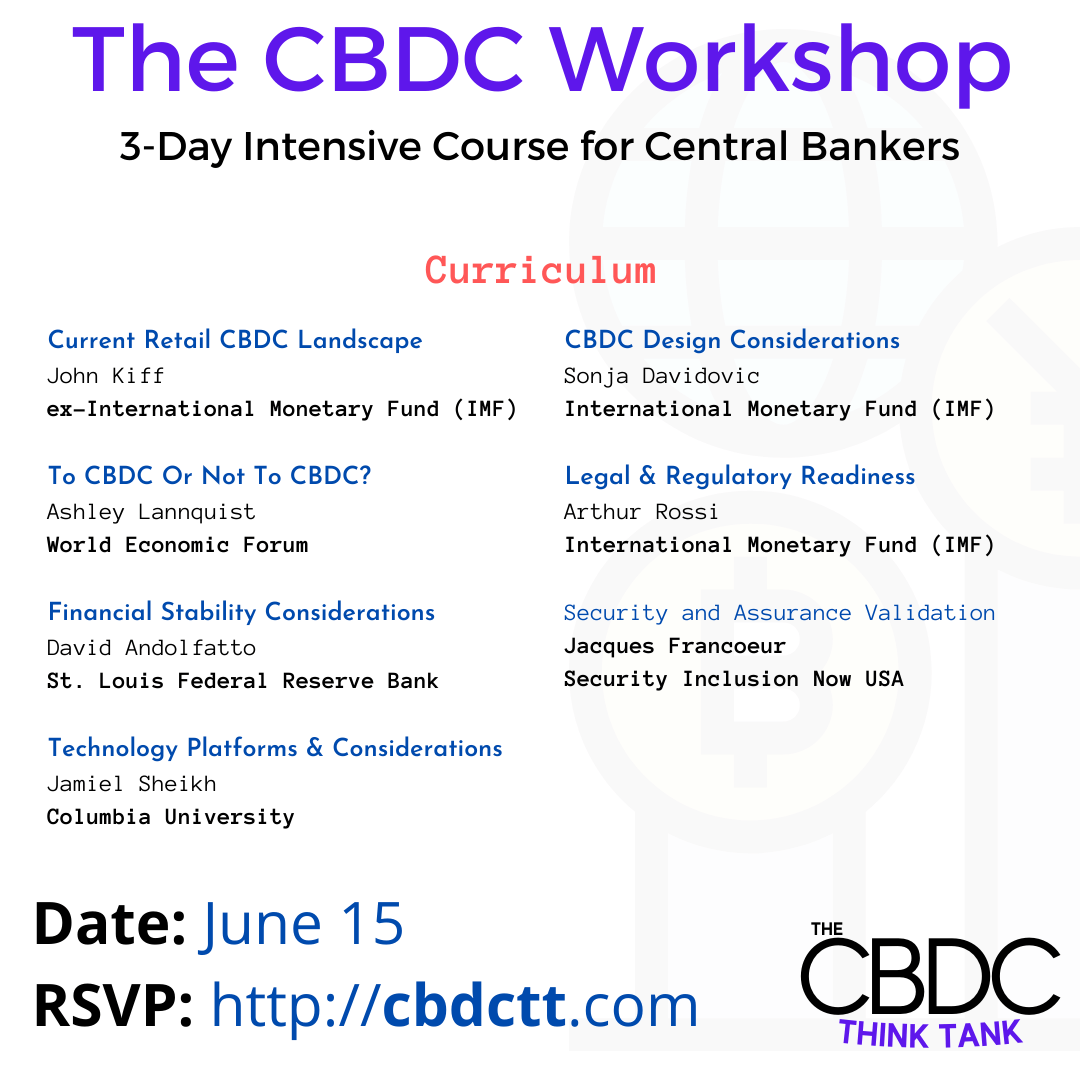
Central bankers can sign up here: https://www.eventbrite.com/e/the-central-bank-digital-currency-workshop-tickets-152572742179

*For those interested in intra-day updates and news that didn’t make the Daily Digest cut, please check out my Diigo fintech bookmarks: https://www.diigo.com/user/kiffmeister/Fintech
Kiffmeister’s #Fintech Daily Digest (06/06/2021)*

El Salvador President Submits Bill to Recognize Bitcoin as Legal Tender

El Salvador President Nayib Bukele announced that he will send a bill to the country’s congress to recognize Bitcoin as legal tender. El Salvador is one of a handful of non-US nations that uses the US dollar as its official currency. The forthcoming legislation is being framed as the next step in a partnership between Strike, which launched its crypto wallet app in the country in March. Reportedly, some 70% of the population there does not have a bank account, and 20% of the country’s GDP comes from remittances sent by migrants to family members. If Bukele’s Bitcoin bill goes through without a hitch, El Salvador will be the first nation to officially recognize Bitcoin as legal tender. 

This is happening against a backdrop of rising tensions with the United States. In late-May, the US Agency for International Development announced that it will be redirecting its funding from El Salvador’s state institutions to its civil society groups, over the country’s removal of Supreme Court justices and the Attorney General, and more generally concerns about transparency and accountability. Bukele’s New Ideas party won a supermajority in February 28 elections, and in May voted to remove the five justices from the Supreme Court’s Constitutional Chamber in a process the justices said was unconstitutional. The new congress also voted to replace the Attorney General with a Bukele loyalist. Those moves combined with the new congressional supermajority removed the remaining checks on Bukele’s power. 

My starting position was that “legal tender” is a rather meaningless concept, especially when it’s not enforced. The Wikipedia definition is “a form of money that courts of law are required to recognize as satisfactory payment for any monetary debt”, but it’s not worth much if it’s not enforced, and that’s an issue in many countries. For example, good luck buying a meal in Shenzhen with some physical yuan, the legal tender in China. But there are many interesting wrinkles around “legal tender” that came out in several Twitter threads in the wake of the El Salvador announcement (e.g., Caitlin Long and George Selgin). And for deeper thoughts about the actual meaning of the term “legal tender” there’s paragraphs 66+ in the recent IMF working paper on legal aspects of central bank digital currency (CBDC) and the “money in the twentieth century” paper by Marcelo Prates. 

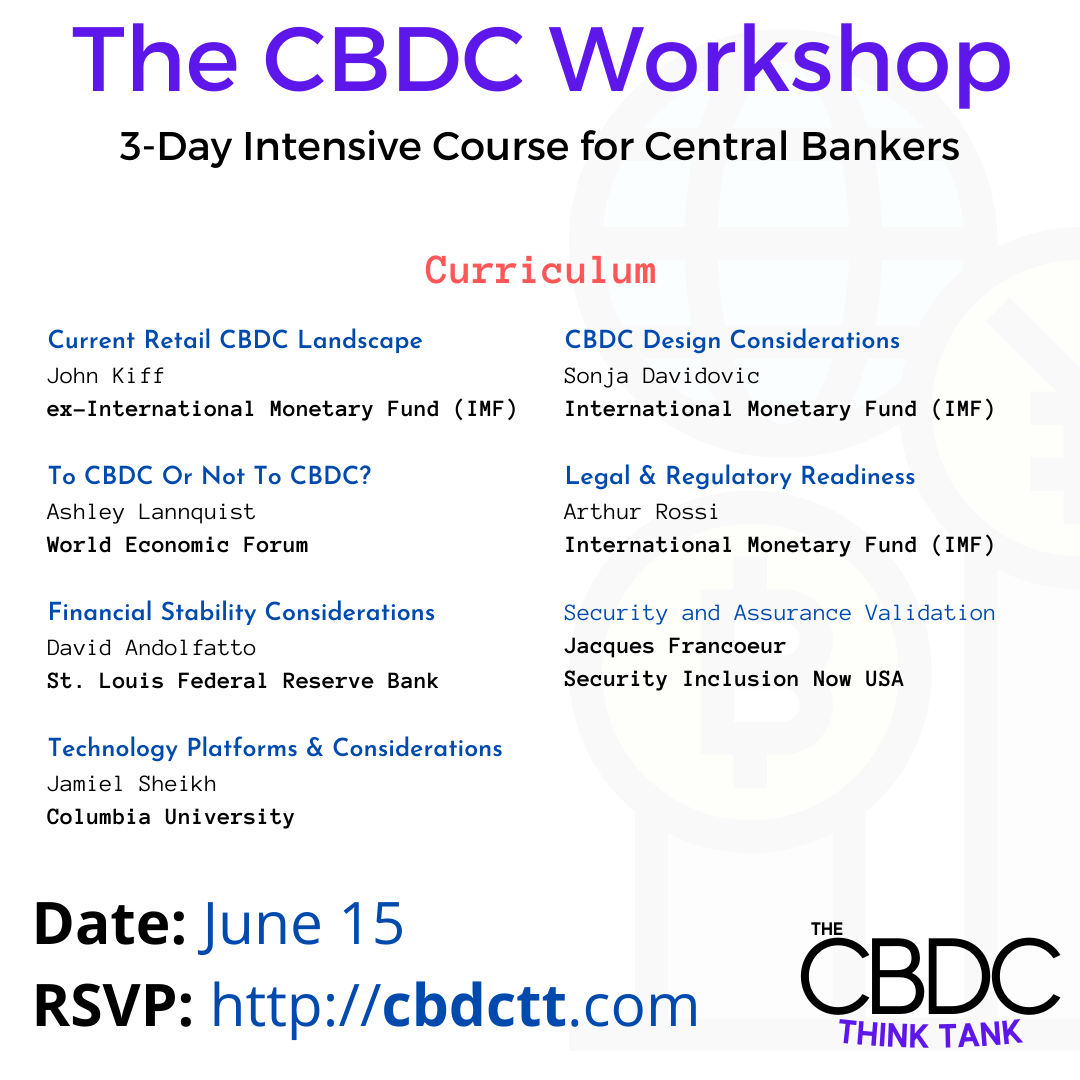
Central bankers can sign up here: https://www.eventbrite.com/e/the-central-bank-digital-currency-workshop-tickets-152572742179

*For those interested in intra-day updates and news that didn’t make the Daily Digest cut, please check out my Diigo fintech bookmarks: https://www.diigo.com/user/kiffmeister/Fintech
Kiffmeister’s #Fintech Daily Digest (06/05/2021)*

G7 Finance Ministers and Central Bank Governors on CBDC and Stablecoins

G7 Finance Ministers and Central Bank Governors remain focused on central bank digital currency (CBDC) and global stablcoins. They committed to work together on their wider public policy implications, noting that CBDCs could act as both a liquid, safe settlement asset and as an anchor for the payments system. Their objective is to ensure that CBDCs are grounded in long-standing public sector commitments to transparency, the rule of law and sound economic governance. CBDCs should be resilient and energy-efficient; support innovation, competition, inclusion, and could enhance cross-border payments; they should operate within appropriate privacy frameworks and minimise spillovers. G7 authorities will work towards common principles and publish conclusions later in the year.

G7 authorities reiterated that no global stablecoin project should begin operation until it adequately addresses relevant legal, regulatory, and oversight requirements through appropriate design and by adhering to applicable standards. They committed to international cooperation to ensure common standards, including by supporting international standard setting bodies in reviewing existing regulatory standards, and emphasize the importance of addressing any identified gaps. They continued to support the Financial Stability Board’s (FSB’s) ongoing work in reviewing regulatory, supervisory and oversight challenges to the implementation of its High Level Recommendations for global stablecoin arrangements. They continued to support the implementation of the G20 Roadmap to enhance cross–border payments and welcome the publication of the FSB consultation on Targets for Addressing the Four Challenges of Cross-border Payments. 

G+D Filia: The evolution of currency

Giesecke+Devrient’s (G+D’s) hybrid-deployment Filia model of a value-based CBDC solution involves existing members of the currency cycle playing a vital role in. The creation and issuance of data files that represent monetary value take place in a highly secure offline environment at the central bank, while distribution is carried out by commercial banks or other financial service providers. Payment service providers can integrate Filia into their own offerings – as part of a larger payment ecosystem – to enable new business models, and to foster growth and innovation in an open system. Filia can be utilized through smartphones, smartcards, smartwatches, and other forms of digital wallets, without the need for a bank account, the disclosure of private data, or consumer fees. It also allows for secure offline consecutive offline payments. 

Central bankers can sign up here: https://www.eventbrite.com/e/the-central-bank-digital-currency-workshop-tickets-152572742179

*For those interested in intra-day updates and news that didn’t make the Daily Digest cut, please check out my Diigo fintech bookmarks: https://www.diigo.com/user/kiffmeister/Fintech

Kiffmeister’s #Fintech Daily Digest (06/04/2021)*

Bitcoin Slips After Musk Tweets Broken-Heart Emoji for Token

Bitcoin slid after a cryptic tweet from Elon Musk apparently hinting at a potential split with the crypto-asset, the latest post from the billionaire to buffet the token’s price. 

E-cedi: Bank of Ghana to pilot digital currency

The Bank of Ghana is in the advanced stages of introducing a retail central bank digital currency (CBDC). The e-cedi will go through three phases before it goes into circulation. The first phase, which is now underway, is focused on the design of the CBDC, and the second phase will look at implementation. In the final stage, a pilot would determine whether the digital currency will be feasible before it goes into circulation. 

EC proposes a trusted and secure Digital Identity for all Europeans

The European Commission (EC) proposed a framework for a European Digital Identity which will be available to all citizens, residents, and businesses in the European Union. The proposed European Digital Identity wallets will enable holders to prove their identity and share electronic documents with the click of a button on their smartphone. They will be able to access online services with their national digital identification, which will be recognized throughout Europe. Very large platforms will be required to accept the use of European Digital Identity wallets upon request of the user, for example to prove their age. Use of the European Digital Identity wallet will always be at the choice of the user. 

Stablecoins and the crypto market liquidity crunch

According to the latest derivatives exchanges stablecoin outflows, people are scrambling to withdraw their stablecoins to convert them to real dollars, creating a liquidity crunch. Paul Santos lays out possible options; (i) exchanges shut down trading pairs, (ii) stablecoin issuers freeze blockchain transactions/funds, (iii) pairs break due to pegs falling apart, panic ensues as fiat redemptions vastly exceed cash reserves, (iv) exchanges issue IOU tokens or shut their doors. 

Binance may be in deep trouble with their margin lending platform

Binance recently announced that Margin Insurance Fund has been bled dry by liquidations, and they are now putting their own “profits” into the fund to try and replenish it. The Insurance Fund is designed to use the collateral from fees on non-bankrupt clients to cover losses when the client accounts go below 0 in value, to limit the occurrences of counterparty liquidation. During the recent flash crash billions was liquidated, probably bleeding the Insurance Fund dry. Binance has also reduced the interest rates on flexible savings on USDT/BUSD from 6.5% to 2%.   

Anchorage to Offer Ethereum-Backed Loans Through BankProv

Anchorage Digital is expanding its lending service with ethereum-backed loans through BankProv, a traditional Massachusetts-based bank formerly known as Provident Bank. Anchorage already provides bitcoin-backed loans through other capital providers, including Silvergate Bank, and is looking to provide institutional clients bank-grade loans on their ethereum as well. Anchorage maintains custody throughout, the custodian simply treats it as collateral in case a client is unable to repay the dollar loan (plus interest). 

OCC’s Hsu: Recent Approvals of Crypto Charters ‘On the Table’ for Review

As the Office of the Comptroller of the Currency (OCC) reviews recent interpretive letters on digital assets and trust charters, Acting Comptroller Michael Hsu reportedly said “everything’s on the table,” including reviewing provisional approvals already granted under prior acting agency leadership. “Charters that were in the pipeline as well as those that were conditionally approved” are “in the scope of the review.” For example, cryptocurrency firms Anchorage, Paxos and Protego have received conditional approvals for national trust charters to custody digital assets. 

Introduction to Privacy Economics

A Bank of Japan paper [sorry, it’s only in Japanese] surveys the literature on the economics of privacy.” The economics of privacy teaches that market mechanisms can address issues such as how to determine socially desirable levels of privacy protection and how to deal with privacy infringements caused by the “negative externalities” of personal information data. It’s difficult to solve. This perception can give important implications when considering how to proceed with the utilization of data while giving a sense of security to people who use digital payment systems. 

South Korea will tax overseas crypto assets starting next year

South Korea’s National Tax Service announced yesterday that Korean residents will be required to pay taxes if the aggregate amount of their account balances in overseas virtual asset businesses exceeds 500 million won, at the end of each month. The new tax rule will be applied to crypto holdings starting January 1, 2022, and the tax reporting will be required starting June 2023. Harsh penalties will be in place for violators.  

Central Bank Digital Currency and Stablecoin Monthly Monitor

On Tuesday I published my May Monthly Monitor which I’ve narrowed down to focus on just central bank and sovereign digital currencies, and stablecoins. The idea remains to summarize all of the month’s key events in these spaces. Comments welcome! 

Central bankers can sign up here: https://www.eventbrite.com/e/the-central-bank-digital-currency-workshop-tickets-152572742179

*For those interested in intra-day updates and news that didn’t make the Daily Digest cut, please check out my Diigo fintech bookmarks: https://www.diigo.com/user/kiffmeister/Fintech

Kiffmeister’s #Fintech Daily Digest (06/03/2021)*

Central Bank Digital Currency and Stablecoin Monthly Monitor

On Tuesday I published my May Monthly Monitor which I’ve narrowed down to focus on just central bank and sovereign digital currencies, and stablecoins. The idea remains to summarize all of the month’s key events in these spaces. Comments welcome! 

Norton360 antivirus tool will allow its 13 million customers to mine Ethereum

Cybersecurity firm, NortonLifeLock, has launched a pilot of Norton Crypto, a tool allowing select Norton360 users to “safely” mine Ethereum (ETH) through the product. Norton plans to open up the mining service to all of its nearly 13 million 360 customers in the coming months, in the future, to support mining of other “top” cryptos. Norton emphasized that its service allows users to mine without requiring them to switch off their antivirus software. 

Banks test DLT-based platform for intraday FX swaps

A group of 11 banks, including NatWest and Deutsche Bank, have been trialling a distributed ledger technology (DLT) based platform for intraday FX swaps. The trial used technology from Finteum, which has been working on a DLT-based intraday FX swaps platform first announced with R3 and Fnality in 2019. During the trial, the banks engaged in simulated trading and discussion sessions. The plan now is to move to live transactions later this year or early in 2022. 

UK FCA further extends the registration deadline for crypto firms

The UK’s Financial Conduct Authority (FCA) has again extended the registration deadline for existing crypto businesses in the country because so many applications are still pending review. The new registration deadline is March 31, 2022. The initial deadline was January 10, 2021, and then July 9, 2021. The extension allows existing crypto firms, who have applied to be registered with the FCA, to continue trading. Also, “an unprecedented number” of firms are withdrawing their applications, because they are not meeting the required standards under the money laundering regulations. 

*For those interested in intra-day updates and news that didn’t make the Daily Digest cut, please check out my Diigo fintech bookmarks: https://www.diigo.com/user/kiffmeister/Fintech

Kiffmeister’s #Fintech Daily Digest (06/02/2021)*

Central Bank Digital Currency and Stablecoin Monthly Monitor

Yesterday I published my May Monthly Monitor which I’ve narrowed down to focus on just central bank and sovereign digital currencies, and stablecoins. The idea remains to summarize all of the month’s key events in these spaces. Comments welcome! 

ECB Says Lack of Official Digital Currency Risks Loss of Control

A European Central Bank (ECB) report concluded that central banks that don’t offer central bank digital currencies (CBDCs) may face threats to their financial systems and monetary autonomy. Consumers and businesses in places that don’t have their own digital currency could end up being reliant on a small number of dominant payment-service providers, including foreign tech giants. That could affect the central bank’s ability to fulfill its mandate and act as a lender of last resort. 

Thailand’s Central Bank Taps German Payments Giant to Design CBDC Prototype

The Bank of Thailand (BoT) has hired German technology company Giesecke+Devrient (G+D) for a retail central bank digital currency (CBDC) proof of concept project. The BoT announced on April 2 that it had begun accepting public feedback on its retail CBDC with an end date of June 15. 

Beijing to give away over $6 million in latest digital yuan test

The Beijing Local Financial Supervision and Administration Bureau is going to give away 40 million yuan in China’s latest central bank digital currency (CBDC) test. 200,000 red envelopes, containing 200 digital yuan each, will be given away to local residents via a lottery run through apps of the Bank of China and the Industrial and Commercial Bank of China. To date, China has conducted 10 digital yuan lottery campaigns across 5 cities, according to The Block’s. Those campaigns started in October 2020, and a total of 230 million digital yuan has been given away. 

SEC delays decision on WisdomTree’s proposed bitcoin ETF

The US Securities and Exchange Commission (SEC) delayed another crypto-asset exchange-traded dund (ETF) listing exchange listing request. This time it was the CBOE’s WisdomTree Bitcoin Trust, on which the SEC pushed back its decision from May 30 to July 14 “so that it has sufficient time to consider the proposed rule change and the comments received.” WisdomTree filed a prospectus with the SEC on March 11, while the CBOE proposed the rule change on March 26. At the end of April, the CBOE’s proposal to list VanEck’s ETF received a similar delay.  

Standard Chartered Bank Launching Cryptocurrency Exchange and Brokerage

Standard Chartered’s innovation arm, SC Ventures, will establish a crypto-asset brokerage and exchange platform, in a joint venture with BC Technology Group, a Hong Kong-based investment company specializing in digital assets. BC Technology operates OSL, the first crypto-asset exchange to be licensed by Hong Kong’s Securities and Futures Commission. The new exchange platform and service will be based in the UK and target the European institutional investor market. It plans to launch the new service in the fourth quarter. This comes  shortly after HSBC said it has no plans to launch a bitcoin trading desk or any other crypto-asset services.  

*For those interested in intra-day updates and news that didn’t make the Daily Digest cut, please check out my Diigo fintech bookmarks: https://www.diigo.com/user/kiffmeister/Fintech

Kiffmeister’s #Fintech Daily Digest (06/01/2021)*

Central Bank Digital Currency and Stablecoin Monthly Monitor

Today I published my May Monthly Monitor which I’ve narrowed down to focus on just central bank and sovereign digital currencies, and stablecoins. The idea remains to summarize all of the month’s key events in these spaces. Comments welcome!

The Reserve Bank of India Clarifies Stance About Crypto Ban

The Reserve Bank of India (RBI) clarified its position concerning the previous ban on cryptocurrency-related activities in the country and the adherence of financial institutions to the rule. The regulator told banks not to cite a 2018 central bank circular as a reason to hinder crypto trades. The 2018 note forbade banks from facilitating such transactions, but has since been struck down by the Supreme Court. Banks must continue with other routine due diligence measures on the deals, but the 2018 circular is no longer valid. 

Can a Cryptocurrency Break the Buck?

This is a great summary of the potential systemic risks around Tether by Timothy Massad, ex-Chairman of the US Commodity Futures Trading Commission. He calls for a strengthening of the regulation of crypto-assets generally and in particular stablecoins. He seems supportive of the Stablecoin Tethering and Bank Licensing Enforcement (STABLE) Act, introduced in Congress last December, that would require that stablecoins be issued by a bank and would impose certain standards. 

Stability After The Crash

According to Coinmetrics, none of the major stablecoins became seriously unpegged during the May 19 crypto flash crash. As prices drop, investors often rush to trade their crypto-assets into stablecoins, while the liquidations can cause stablecoins being used as collateral to be sold. This sudden shift in supply and demand can potentially knock stablecoin prices from their $1 peg, and threaten their stability. Although I and some others observed some USD stablecoins below 90 cents on some trading screens, apparently none actually traded there (see figure below). 

UK Bank Starling Bans Crypto Exchange Deposits Due To ‘Suspected Financial Crime’

UK digital bank Starling has barred its customers from sending money to crypto-asset exchanges, after having observed high levels of illegal activity. However, this suspension only applied to the “faster payments” option, which allows low-cost bank transfers at any time. Also, withdrawals aren’t affected, and no other UK banks have followed suit. Starling plans to lift its restriction on June 23 after testing a new financial crime prevention system. 

*For those interested in intra-day updates and news that didn’t make the Daily Digest cut, please check out my Diigo fintech bookmarks: https://www.diigo.com/user/kiffmeister/Fintech