Kiffmeister’s #Fintech Daily Digest (20240412)

On DeFi and on-chain CeFi: How (not) to regulate decentralized finance (DeFi)

The Journal of Financial Regulation (JoFR) published a paper that offers a framework to assess the factual decentralization of blockchain-based decentralized finance (DeFi) financial infrastructures, which is crucial for regulatory assessments. It explores various potential sources of centralized control, either endogenous or through inherited dependencies on other projects (“centralization vectors”). It finds that many DeFi projects are subject to such vectors that are likely critical, and taking them into account substantially reduces the number of DeFi projects that are genuinely decentralized. The paper argues that if a project has significant centralization vectors it can and likely should be regulated. On the other hand, for truly decentralized projects, the regulatory focus should remain on the on- / off-ramps to / from the spheres of on-chain centralized finance (CeFi) and (traditional) CeFi. [Read more at the JoFR].

Hong Kong still cautious about introducing a retail CBDC

Hong Kong Monetary Authority (HKMA) CEO Eddie Yue remains skeptical about the benefits of a retail central bank digital currency (CBDC). He started by listing some of the potential benefits, including serving as a fundamental layer to facilitate interoperability and interlinking between various future digital economy participants. Also, it could act as a bridge between different types of privately-issued digital money, and ensure all private money to be exchangeable with a public money on demand and at par. He also envisioned that a retail CBDC could be a potential “backbone” and anchor, bridging a legal tender and digital assets, offering price stability and confidence needed to empower more innovations, and developing a vibrant sector and ecosystem for digital assets in Hong Kong. Nevertheless, Mr. Yue said that more research is needed on whether its benefits outweigh the risks, particularly “given the generally efficient and competitive retail payment ecosystem in Hong Kong” [and the HKMA] will continue to take a use-case driven approach in thinking about whether and when to introduce a retail CBDC.” [Read the full speech at the HKMA]

Atlantic Council calls for global interoperability standards for CBDC

The Atlantic Council published an updated version of their “Standards And Interoperability: The Future Of The Global Financial System” white paper calling for calling for global CBDC interoperability standards. It sets some common definitions and understanding of the current state of international standards for those seeking to understand the current state of international standards and existing gaps and areas for improvement. It also notes that, standards ensuring consistency and seamless functionality are not static; they must be flexible enough to accommodate advancements in digital currency technology, shifts in economic priorities, and changing societal perspectives on digital assets. [Read more at the Atlantic Council]

Kiffmeister’s central bank digital currency monthly monitor

Just a reminder that I produce a monthly digest of central bank digital currency (CBDC) developments exclusively for the official sector. So (only) if you work at a central bank, ministry of finance or international financial institution (e.g., the BIS, IMF, OECD, World Bank) and who would like to receive it by email on the first business day of every month, please DM me on LinkedIn or email me at chronicles@kiffmeister.com.

Kiffmeister’s #Fintech Daily Digest (20240411)

Valuing safety and privacy in retail central bank digital currency

The Reserve Bank of Australia (RBA) published a paper that explores the merits of introducing a retail central bank digital currency (CBDC) in Australia, focusing on the extent to which consumers would value having access to a digital form of money that is even safer and potentially more private than commercial bank deposits. The results suggest that the average consumer attaches no value to the added safety of a CBDC. This is consistent with bank deposits in Australia already being perceived as a safe form of money, and physical cash issued by the RBA continuing to be available as an alternative option. Privacy settings of a CBDC, which can take various forms, look more consequential for the CBDC value proposition. However, no clear relationship was found between safety or privacy valuations and the degree of consumers’ cash use. [Read more at the RBA]

Observations from the retail CBDCs of the Caribbean

The Kansas City Fed published an article by Franklin Noll that analyzes the underwhelming adoption of retail CBDC in the three Caribbean jurisdictions where they have been launched (Bahamas and Jamaica) or are being piloted (Eastern Caribbean Currency Union). It concludes that, to spur adoption it needs to add value relative to cash, be widely accepted, readily accessed, and easily used. Also, the new platform may need to be integrated into existing payments systems; into ways that consumers, merchants, and banks do business; and, ultimately, into people’s lives. [Read more at the Kansas City Fed]

ESMA analysis finds concentration risks in most aspects of crypto

The European Securities and Markets Authority (ESMA) published an analysis of crypto-asset market structures, secondary trading and their relevance for the European Union. It finds that crypto-asset market capitalizations and trading volumes are significantly concentrated in a few assets, with a high reliance on the US dollar and the South Korean won as market on- and off-ramps. Only around 20% to 30% of transactions involve fiat currencies and most transactions occur within the system itself. Also, trading volumes are highly concentrated in a few crypto exchanges, with the largest exchange (Binance) accounting for almost half of global trading volumes. [Read more at ESMA]

Kiffmeister’s central bank digital currency monthly monitor

Just a reminder that I produce a monthly digest of central bank digital currency (CBDC) developments exclusively for the official sector. So (only) if you work at a central bank, ministry of finance or international financial institution (e.g., the BIS, IMF, OECD, World Bank) and who would like to receive it by email on the first business day of every month, please DM me on LinkedIn or email me at chronicles@kiffmeister.com.
Kiffmeister’s #Fintech Daily Digest (20240409)

SNB Chair reflects on wholesale CBDC pilots. Retail too risky

Swiss National Bank (SNB) Chair Thomas Jordan provided an update on the central bank’s central bank digital currency (CBDC) experiments and thinking. Firstly, the SNB’s position remains that there is no need for a Swiss retail CBDC because digital payment requirements are already satisfied, and there are possibly far-reaching consequences for the financial system. However, the SNB continues to advance its wholesale CBDC work aimed at settling tokenized securities on the SIX Digital Exchange (SIX) platform. He also called attention to the unusual approach of issuing the CBDC on a third-party (i.e., SDX) platform. However, as pointed out by Ledger Insights, SIX also operates the Swiss real-time gross settlement (RTGS) system, so a trust relationship already exists. However, the SNB is also evaluating other options for tokenized securities settlement, such as the RTGS “trigger” solutions being tested by the European Central Bank in its wholesale CBDC experiments. [Read more at the SNB]

Bank of Russia expects CBDC to take 5-7 years to achieve mass use

Bank of Russia Governor Elvira Nabiullina provided an update on its digital ruble pilot to the State Duma. A serious scaling will happen no earlier than 2025, depending on how the pilot is going, and after that, it will take five to seven years to become a mass product. The Governor said that “this will be a natural process, because the choice of the people themselves, the business, is fundamental, it should be convenient for them. [Read more in the State Duma Gazette]

Stablecoins: regulatory responses to their promise of stability

The Bank for International Settlements (BIS) published a paper that assesses the evolving regulatory landscape for issuers of single fiat-pegged stablecoins. It compares regulatory frameworks issued by 11 authorities in seven jurisdictions to identify emerging trends and commonalities in their respective frameworks. It finds that many regulatory approaches have similar key requirements, but there are relevant differences in regulatory regimes. For example, in-scope stablecoin definitions vary significantly across regulations, and there are notable differences in the specifics of the regulatory treatment of reserves, and in relation to segregation and custody. [Read more at the BIS]

Brunei and Laos join the ASEAN Regional Payment Connectivity Initiative

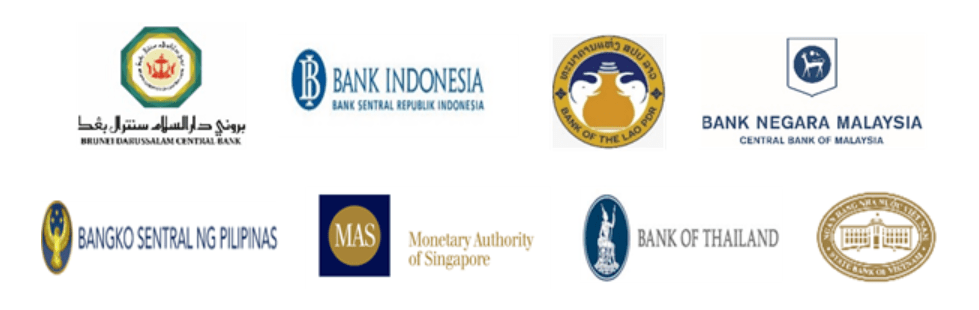
Brunei Darussalam Central Bank (BDCB) and Bank of the Lao PDR (BOL) have officially joined the ASEAN Regional Payment Connectivity (RPC). The group now has eight member countries (see below). RPC is an initiative that aims to promote, faster, cheaper, more transparent, and more inclusive cross-border payments through, among others, quick response (QR) code-based payment and fast payment modalities. [Read more at the Monetary Authority of Singapore]

Kiffmeister’s central bank digital currency monthly monitor

Just a reminder that I produce a monthly digest of central bank digital currency (CBDC) developments exclusively for the official sector. So (only) if you work at a central bank, ministry of finance or international financial institution (e.g., the BIS, IMF, OECD, World Bank) and who would like to receive it by email on the first business day of every month, please DM me on LinkedIn or email me at chronicles@kiffmeister.com.

Kiffmeister’s #Fintech Daily Digest (20240408)

Clearstream joins ECB DLT for wholesale central bank money settlement trials

Clearstream, Deutsche Börse Group’s post-trade business, joins the European Central Bank (ECB) trials and experiments, aimed at exploring the potential of distributed-ledger technology (DLT) for wholesale central bank money settlement. Clearstream aims to assess the feasibility of using DLT for wholesale transaction processing, using tokenized securities, including conducting euro-denominated issuance and delivery-versus-payment (DvP) transactions across different use-cases and payment models. Three solutions will be tested by the central banks of Germany (Trigger solution), France (wholesale central bank digital currency (CBDC)) and Italy (TIPS Hashlink). [Read more at Clearstream]

Macroeconomic modelling of CBDC: A critical review

The ECB’s Ulrich Bindseil co-authored a paper that argues that macroeconomic models of retail CBDC often start from an early CBDC narrative which is no longer in line with the one of central banks actually working on CBDC. These include not accounting for design features communicated by central banks, such as no-remuneration, quantity limits, access restrictions, and automated sweeping functionality linking CBDC wallets with commercial bank accounts. Also, they do not explain well enough the difference between CBDC and banknotes within their macro-economic models, apart from remuneration. [Read more at SSRN]

LCH gets regulatory approval to clear Bitcoin index derivatives

LCH SA has received the required regulatory approval from the French national competent authorities (ACPR, Banque de France and AMF) and European supervisory authorities (EMIR College, ESMA) to clear cash-settled Bitcoin index futures and options contracts. LCH SA will provide clearing services through its new dedicated service, LCH DigitalAssetClear, for these contracts traded on the UK FCA regulated digital asset derivatives trading venue, GFO-X. LCH DigitalAssetClear is underpinned by a segregated default fund, tailored risk management model and dedicated set of clearing rules. LCH SA plans to launch the clearing service later in 2024. [Read more at LCH]

Kiffmeister’s central bank digital currency monthly monitor

Just a reminder that I produce a monthly digest of central bank digital currency (CBDC) developments exclusively for the official sector. So (only) if you work at a central bank, ministry of finance or international financial institution (e.g., the BIS, IMF, OECD, World Bank) and who would like to receive it by email on the first business day of every month, please DM me on LinkedIn or email me at chronicles@kiffmeister.com.

Kiffmeister’s #Fintech Daily Digest (20240407)

Last Sunday I recommended Richard Turrin’s “Cashless” weekly summary of central bank digital currency (CBDC) developments (with some AI news thrown in to spice things up). I pointed to his LinkedIn page, but the best place to subscribe to it is on his Substack page here. And don’t forget to check out Conrad Kraft’s latest weekly here.

Ethiopian central bank to undertake digital currency study

The National Bank of Ethiopia (NBE) is reportedly embarking on a study on the use of a CBDC as part of its Homegrown Economic Reform Agenda (HGER). The NBE is set to initiate the study in June 2024 under the macroeconomic team led by Girma Birru, according to the latest HGER detail matrix covering three years leading up to 2026. [Read more at the Ethiopian Reporter]

Kiffmeister’s central bank digital currency monthly monitor

Just a reminder that I produce a monthly digest of central bank digital currency (CBDC) developments exclusively for the official sector. So (only) if you work at a central bank, ministry of finance or international financial institution (e.g., the BIS, IMF, OECD, World Bank) and who would like to receive it by email on the first business day of every month, please DM me on LinkedIn or email me at chronicles@kiffmeister.com.

Kiffmeister’s #Fintech Daily Digest (20240406)

Reserve Bank of Zimbabwe launches new ZiG “structured” currency

The Reserve Bank of Zimbabwe (RBZ) launched a new “structured” currency called “Zimbabwe Gold” (ZiG) that will be anchored to a weighted value of the central bank’s precious metal (mainly gold) and foreign currency reserves. As of April 5, 2024, the RBZ had reserve assets of US$100 million in cash and 2,522 kgs of gold (US$185 million) to back the entire local currency component of reserve money which stood at ZW$2.6 trillion (US$90 million). ZiG notes and coins shall be issued in denominations made up of 1ZiG, 2ZiG, 5ZiG, 10ZiG, 20Zig, 50ZiG, 100ZiG, and 200ZiG, but no mention is made of what becomes of the ZiG (now GBDT) wallets, assuming such wallets ever existed. [Read more at the RBZ]

There’s a bit of funky history here, because in May 2023, the RBZ introduced Gold-Backed Digital Tokens (GBDTs) that were pegged to gold prices and fully backed by physical gold held by the RBZ. Apparently, in July 2023, the GBDT was renamed “Zimbabwe Investment Gold” (ZiG) and in October 2023 the RBZ advised that the ZiG will become one of the “means of payments” for domestic transactions, at which point I designated the ZiG as a central bank digital currency (CBDC) in my CBDC tabulation. Now the RBZ has renamed existing ZiG accounts GBDT accounts to be used for their original investment instrument purposes, rather than as a medium of exchange.

So are GBDT accounts CBDC when it appears they’re no longer intended as a medium of exchange? The Bank for International Settlements (BIS) definition of CBDC, and the one I use, is that “a CBDC is a digital payment instrument, denominated in the national unit of account, that is a direct liability of the central bank“. The new GBDT are clearly direct liabilities of the central bank, but are they still payment instruments and units of account? And I still have a question as to whether the old ZiG was ever actually activated and used as a retail CBDC. Can anyone out there confirm or deny that?

A primer on Bitcoin cross-border flows: Measurement and drivers

The IMF published a paper that uses raw Bitcoin data covering both on-chain (on the Bitcoin blockchain) and off-chain (outside the Bitcoin blockchain) transactions globally to gain a better understanding of cross-border Bitcoin flows. It finds that Bitcoin cross-border flows respond differently than capital flows to traditional drivers of capital flows, and differences appear between on-chain and off-chain Bitcoin cross-border flows. Off-chain cross-border flows seem correlated with incentives to avoid capital flow restrictions. [Read more at the IMF]

Kiffmeister’s central bank digital currency monthly monitor

Just a reminder that I produce a monthly digest of central bank digital currency (CBDC) developments exclusively for the official sector. So (only) if you work at a central bank, ministry of finance or international financial institution (e.g., the BIS, IMF, OECD, World Bank) and who would like to receive it by email on the first business day of every month, please DM me on LinkedIn or email me at chronicles@kiffmeister.com.

Kiffmeister’s #Fintech Daily Digest (20240405)

RBI to broaden e-rupee’s retail access beyond banks

The Reserve Bank of India (RBI) plans to its make e-rupee central bank digital currency (CBDC) accessible to a broader segment of users by enabling non-bank payment system operators to offer CBDC wallets. Such non-bank payment system operators, include third-party payment app providers like PhonePe, Google Pay and Paytm. This expansion will facilitate testing of the resiliency of CBDC platform to handle multi-channel transactions, and hopefully help lift underwhelming transaction volumes. [Read more at the RBI]

ESMA explains why DLT Pilot Regime hasn’t taken off

The European Securities and Markets Authority (ESMA) published an update on the uptake of distributed ledger technology (DLT) by financial market infrastructures in the context of the European Union’s DLT Pilot Regime. The regime, launched in March 2023, aimed to pave the way for innovative DLT market infrastructures, such as DLT multilateral trading facilities and settlement systems. However, uptake has been underwhelming, with only four applications submitted so far, which ESMA blames uncertainties regarding on-chain cash settlement solutions, the use of self-hosted wallets, and the scope of admitted DLT financial instruments. [Read more at ESMA]

Bhutan to upgrade Bitcoin mining in Himalayas as ‘halving’ looms

Bhutan’s government investment arm, Druk Holding & Investments, and Bitdeer Technologies Group are planning a six-fold ramp up of their Bitcoin mining operation to help offset the revenue impact of the upcoming “halving”. The planned hardware upgrades will increase Bhutan’s mining capacity by 500 megawatts by the first half of 2025. [Read more at Bloomberg]

Kiffmeister’s central bank digital currency monthly monitor

Just a reminder that I produce a monthly digest of central bank digital currency (CBDC) developments exclusively for the official sector. So (only) if you work at a central bank, ministry of finance or international financial institution (e.g., the BIS, IMF, OECD, World Bank) and who would like to receive it by email on the first business day of every month, please DM me on LinkedIn or email me at chronicles@kiffmeister.com.

Kiffmeister’s #Fintech Daily Digest (20240404)

Ripple to launch USD-backed stablecoin on Ethereum and XRP Ledger

Ripple plans to launch a stablecoin pegged to the U.S. dollar across the Ethereum and XRP Ledger blockchains. They will be fully backed by U.S. dollar deposits, short-term U.S. government treasuries, and “other cash equivalents. Ripple will provide monthly attestations of its holdings that back the stablecoin, which will be audited by a third-party accounting firm. It is expected to be available later this year, subject to applicable regulatory approval. [Read more at Ripple]

First participants in ECB wholesale DLT trials chosen

The European Central Bank (ECB) published the list of the first institutions to participate in its trials of the settlement of wholesale transactions on distributed ledger technology (DLT) based platforms using central bank money. The list is comprised of five central banks, ten institutions, six market DLT operators and five central banks. The trials will involve real transactions as well as mock simulations, with most of the tests focusing on securities settlement. There also plans to consider use cases for payment versus payment (FX) and cross border payment. Three settlement solutions are part of the trials, provided by the central banks of Germany (RTGS-based “trigger” solution), France (wholesale central bank digital currency (CBDC) solution) and Italy (TIPS Hashlink solution). [Read more at the ECB]

Kiffmeister’s central bank digital currency monthly monitor

Just a reminder that I produce a monthly digest of central bank digital currency (CBDC) developments exclusively for the official sector. So (only) if you work at a central bank, ministry of finance or international financial institution (e.g., the BIS, IMF, OECD, World Bank) and who would like to receive it by email on the first business day of every month, please DM me on LinkedIn or email me at chronicles@kiffmeister.com.

Kiffmeister’s #Fintech Daily Digest (20240403)

The CBDCTracker.org central bank digital currency (CBDC) database has been updated for developments in March 2024. Check out Atakan Kavuklu’s blog for a complete rundown of the March developments.

Project Agorá: Exploring tokenized commercial bank deposits

The Bank for International Settlements (BIS) together with seven central banks will explore how tokenization of wholesale central bank money (i.e., wholesale CBDC) and commercial bank deposits on programmable platforms can improve the monetary system. Project Agorá’s primary area of exploration will be to increase the speed and integrity of international payments, while lowering costs by building on the BIS’s proposed unified ledger concept. The BIS will issue a call for expressions of interest to private financial institutions, with the Institute of International Finance (IIF) acting as the intermediary and convener, to join the project. [Read more at the BIS]

CBDCs: Consumer attitudes and expectations in the United States

The Federal Reserve Bank of Philadelphia conducted a survey in October 2022 in which it asked consumers about their interest in retail central bank digital currency (CBDC). 52.6% of respondents said they would possibly use a digital dollar, but widespread consumer adoption will require that the product does not require fees to access or use (63.5% of respondents who would possibly use a digital dollar), be accepted widely in the marketplace (57.3%), provides high levels of security and privacy for consumers (42.0%), and bear interest (39.2%). At the same time, not all consumers were confident they could render an opinion about a CBDC. [Read more at the Philadelphia Fed]

Bank of England and UK Financial Conduct Authority propose Digital Securities Sandbox

The Bank of England (BoE) and U.K. Financial Conduct Authority published a consultation paper proposing to implement and operate a Digital Securities Sandbox (DSS). The DSS will allow firms to use developing technology, such as distributed ledger technology (DLT), in the issuance, trading and settlement of securities such as shares and bonds. Firms that successfully apply for the DSS will be able to operate under a set of rules and regulations that has been modified to facilitate this. The DSS lasts for five years and will help regulators design a permanent technology friendly regime for the securities market. [Read more at the BoE]

MAS introduces new crypto regulations, including digital asset custody

The Monetary Authority of Singapore (MAS) has introduced cryptocurrency-related amendments to the Payment Services Act, focusing on digital payment token (DPT) service providers, including guidelines for digital asset custody. Under the new guidance, customers’ digital assets held in trust must be segregated from the assets of the service provider, and at least 90% of customer assets must be stored offline in cold wallets. The guidelines also mandate that service providers prevent retail customers from engaging in activities like pledging, lending, or staking their digital assets. [Read more at the MAS]

Kiffmeister’s central bank digital currency monthly monitor

Just a reminder that I produce a monthly digest of central bank digital currency (CBDC) developments exclusively for the official sector. So (only) if you work at a central bank, ministry of finance or international financial institution (e.g., the BIS, IMF, OECD, World Bank) and who would like to receive it by email on the first business day of every month, please DM me on LinkedIn or email me at chronicles@kiffmeister.com

The Sovereign Official Digital Association (SODA) is a technology-agnostic firm offering advisory services at the intersection of central banking, digital finance and the web3 industry, aiming to make public digital money a reality. SODA believes institutions in the existing financial ecosystem should have access to the tools and resources they need to move from discussion to action. SODA offers ‘real life’ use cases to help test digital money and drive adoption as central banks and other public institutions explore the future of a more financially inclusive world powered by interoperable blockchain-based networks. SODA would love you to join us on this journey – please get in touch (chris@sodapublicmoney.org).

Satoshi Capital Advisors is a New York-based, global advisory firm that works with central banks, governments, and the private sector to architect, implement, and operate varying initiatives. Satoshi Capital Advisors’ central bank work revolves around CBDC architecture and implementation, providing advisory services from research phase through to growth phase. Utilizing a product-market fit and technology agnostic approach to CBDC architecture and implementation enables Satoshi Capital Advisors to build tailored solutions, bespoke to local financial system nuances. Satoshi Capital Advisors welcomes requests from central bank officials for virtual and in-person CBDC workshops. [Click here for more information]

WhisperCash offers the first fully offline digital currency platform that has the same properties as physical cash. It can perform secure consecutive offline payments without compromising on security, privacy or accessibility. WhisperCash allows direct person to person offline payments without any server infrastructure or internet connectivity. It comes in various form factors including the self-contained credit card-sized “Pro” that sports an eInk screen and capacitive keyboard, and lasts for two weeks between recharges assuming a few transactions per day. [Click here for more information]

Kiffmeister’s #Fintech Daily Digest (20240402)

ECB looking for consultant to support digital euro offline functionality

The European Central Bank (ECB) is looking for a senior payments industry expert to provide consultancy services on a 40% part-time basis to support the project team designing and developing the digital euro’s offline functionality. The successful candidate will support the team in (i) defining the deployment of the digital euro’s offline functionality in end users’ devices in line with the requirements set in the draft legislative proposal; (ii) designing and implementing an optimal user experience for offline contactless payments via smartphones; (iii) assessing how an offline digital euro can be integrated within the existing terminal landscape at the point of sale; (iv) supporting the drafting of detailed requirements for the digital euro’s offline functionality. [Read more at the ECB]

Bank of China launches e-CNY offline payments for Qingdao Rail Transit

The Qingdao branch of the Bank of China (BOC) has rolled out a new payment option for Qingdao Rail Transit through digital yuan hardware wallets for payments without network and electricity. This “deferred payment” system allows travelers to use the public transit service first and pay later with the hardware wallet featured enabled on users’ smartphones. This functionality requires the use of an Android-based smartphone running a “Super SIM” card that stores digital yuan account information for use when there’s no network or electricity, introduced by China Mobile, China Telecom, and China Unicom in 2023. [Read more at Dazhong]

Japan’s first deposit-backed stablecoin “Tochika” has been launched

Hokkoku Bank together with the City of Suzu and Kono Shinkin Bank, has launched the “Suzu Tochika” deposit-backed blockchain-based stablecoin in Suzu City, Ishikawa Prefecture. In the summer of 2023, the consortium launched the “Suzu Tochituka” digital payment service for Suzu City-issued “Suzu Tochipo” points used for payments at participating stores. A Tochika account can be opened by registering a bank deposit account for charging the Tochituka app, with 1 tochika equating to 1 yen, and later redeemed at the same rate. Tochika is accepted at Tochituka member stores. Merchants pay a 0.5% settlement fee on Tochika transactions. [Read more on Norbert Gehrke’s Medium blog]

Decentralized finance (DeFi) leverage

The Bank for International Settlements (BIS) published a paper that examines decentralized finance (DeFi) leverage – ie the asset-to-equity ratio at the wallet level in major lending platforms. The overall leverage typically ranges between 1.4 and 1.9, while the largest and most active users consistently exhibit higher leverage than the rest. Leverage is mainly driven by loan-to-value requirements and borrowing costs, as well as crypto market price movements and sentiments. Higher wallet leverage generally undermines lending resilience, particularly increasing the share of outstanding debt close to being liquidated. Borrowers with high leverage are more likely to tilt towards volatile collateral when their debt positions are about to be liquidated. [Read more at the BIS]

Making sense of decentralized finance (DeFi)

The Philadelphia Fed published a paper that finds that DeFi has not decentralized decision-making power to users in the way its proponents had hoped. Decision-making power in DeFi remains highly concentrated in a few hands; insiders such as the founding team and venture capital funders often retain a substantial fraction of a platform’s tokens as compensation. Also, most small-scale users have little incentive to participate in votes on platform policies, since their votes are unlikely to influence the outcome. There may also be formal or informal barriers to small users’ participation. The paper concludes that future progress in DeFi will require not only technical advances in smart contract and distributed ledger design but also economic solutions to the governance problems faced by these platforms. [Read more at the Philly Fed]

Kiffmeister’s central bank digital currency monthly monitor

Just a reminder that I produce a monthly digest of central bank digital currency (CBDC) developments exclusively for the official sector. So (only) if you work at a central bank, ministry of finance or international financial institution (e.g., the BIS, IMF, OECD, World Bank) and who would like to receive it by email on the first business day of every month, please DM me on LinkedIn or email me at chronicles@kiffmeister.com

The Sovereign Official Digital Association (SODA) is a technology-agnostic firm offering advisory services at the intersection of central banking, digital finance and the web3 industry, aiming to make public digital money a reality. SODA believes institutions in the existing financial ecosystem should have access to the tools and resources they need to move from discussion to action. SODA offers ‘real life’ use cases to help test digital money and drive adoption as central banks and other public institutions explore the future of a more financially inclusive world powered by interoperable blockchain-based networks. SODA would love you to join us on this journey – please get in touch (chris@sodapublicmoney.org).

Satoshi Capital Advisors is a New York-based, global advisory firm that works with central banks, governments, and the private sector to architect, implement, and operate varying initiatives. Satoshi Capital Advisors’ central bank work revolves around CBDC architecture and implementation, providing advisory services from research phase through to growth phase. Utilizing a product-market fit and technology agnostic approach to CBDC architecture and implementation enables Satoshi Capital Advisors to build tailored solutions, bespoke to local financial system nuances. Satoshi Capital Advisors welcomes requests from central bank officials for virtual and in-person CBDC workshops. [Click here for more information]

WhisperCash offers the first fully offline digital currency platform that has the same properties as physical cash. It can perform secure consecutive offline payments without compromising on security, privacy or accessibility. WhisperCash allows direct person to person offline payments without any server infrastructure or internet connectivity. It comes in various form factors including the self-contained credit card-sized “Pro” that sports an eInk screen and capacitive keyboard, and lasts for two weeks between recharges assuming a few transactions per day. [Click here for more information]