

SNB Chair reflects on wholesale CBDC pilots. Retail too risky
Swiss National Bank (SNB) Chair Thomas Jordan provided an update on the central bank’s central bank digital currency (CBDC) experiments and thinking. Firstly, the SNB’s position remains that there is no need for a Swiss retail CBDC because digital payment requirements are already satisfied, and there are possibly far-reaching consequences for the financial system. However, the SNB continues to advance its wholesale CBDC work aimed at settling tokenized securities on the SIX Digital Exchange (SIX) platform. He also called attention to the unusual approach of issuing the CBDC on a third-party (i.e., SDX) platform. However, as pointed out by Ledger Insights, SIX also operates the Swiss real-time gross settlement (RTGS) system, so a trust relationship already exists. However, the SNB is also evaluating other options for tokenized securities settlement, such as the RTGS “trigger” solutions being tested by the European Central Bank in its wholesale CBDC experiments. [Read more at the SNB]
Bank of Russia expects CBDC to take 5-7 years to achieve mass use
Bank of Russia Governor Elvira Nabiullina provided an update on its digital ruble pilot to the State Duma. A serious scaling will happen no earlier than 2025, depending on how the pilot is going, and after that, it will take five to seven years to become a mass product. The Governor said that “this will be a natural process, because the choice of the people themselves, the business, is fundamental, it should be convenient for them. [Read more in the State Duma Gazette]
Stablecoins: regulatory responses to their promise of stability
The Bank for International Settlements (BIS) published a paper that assesses the evolving regulatory landscape for issuers of single fiat-pegged stablecoins. It compares regulatory frameworks issued by 11 authorities in seven jurisdictions to identify emerging trends and commonalities in their respective frameworks. It finds that many regulatory approaches have similar key requirements, but there are relevant differences in regulatory regimes. For example, in-scope stablecoin definitions vary significantly across regulations, and there are notable differences in the specifics of the regulatory treatment of reserves, and in relation to segregation and custody. [Read more at the BIS]
Brunei and Laos join the ASEAN Regional Payment Connectivity Initiative
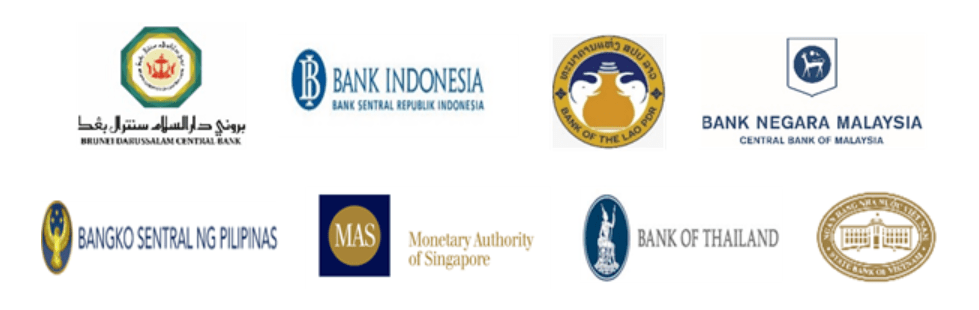
Brunei Darussalam Central Bank (BDCB) and Bank of the Lao PDR (BOL) have officially joined the ASEAN Regional Payment Connectivity (RPC). The group now has eight member countries (see below). RPC is an initiative that aims to promote, faster, cheaper, more transparent, and more inclusive cross-border payments through, among others, quick response (QR) code-based payment and fast payment modalities. [Read more at the Monetary Authority of Singapore]
Kiffmeister’s central bank digital currency monthly monitor
Just a reminder that I produce a monthly digest of central bank digital currency (CBDC) developments exclusively for the official sector. So (only) if you work at a central bank, ministry of finance or international financial institution (e.g., the BIS, IMF, OECD, World Bank) and who would like to receive it by email on the first business day of every month, please DM me on LinkedIn or email me at chronicles@kiffmeister.com.
