Kiffmeister’s #Fintech Daily Digest (02/18/2022)*

Eight countries jointly propose principles for mutual recognition of digital IDs

The Digital Identity Working Group (DIWG) has proposed a set of high-level principles to enable future mutual recognition and interoperability of digital identities. The members of the DIWG are from Australia, Canada, Finland, Israel, New Zealand, Singapore, the Netherlands, and the United Kingdom. This is the group’s first set of publicly released work since its 2020 inception. [Read more]

Say Hello To JAM-DEX

Bank of Jamaica’s central bank digital currency (CBDC) now has a name – Jamaica Digital Exchange or JAM-DEX for short, with the tagline “no cash, no problem!” The pilot was completed in December 2021 and launch is expected during the first quarter of 2022. [Read more]

JPMorgan unveils research on quantum resistant blockchain network

JPMorgan Chase has unveiled research on a Quantum Key Distribution (QKD) blockchain network that is resistant to quantum computing attacks. QKD utilizes quantum mechanics and cryptography to enable two parties to exchange secure data and detect and defend against third parties that are using quantum computers to attempt to eavesdrop on the exchange. [Read more]

Crypto bill incoming: Russia’s finance ministry kicks off public comment period

The Russian Finance Ministry filed two development notices to start the process of developing a digital currency legal framework. The documents will be published in the next three weeks. [Read more]

Ukrainian Parliament Adopts Amended Virtual Assets Law

Ukraine’s parliament has adopted new crypto-asset legislation. The draft law initially approved in September 2021, envisaged the establishment of a dedicated regulatory body run by the Ministry of Digital Transformation. The amended legislation makes the National Securities and Stock Market Commission and the National Bank of Ukraine the main crypto-asset regulators. [Read more]

* To get these updates sent to your inbox, please sign up here. Also, for those interested in intra-day updates and news that didn’t make the Daily Digest cut, please check out my Diigo fintech bookmarks: https://www.diigo.com/user/kiffmeister/Fintech.

Central Bank Digital Currency Workshop, Hosted by the CBDC Think Tank

The CBDC Think Tank (CBDCTT)  is hosting an in-person CBDC Workshop in Washington DC on February 24 exclusively for central bank and finance ministry staff looking to understand and position for CBDC issuance.  [Register here]

Also, in Q2 2022, the CBDCTT will launch the OpenCBDC Sandbox for evaluating, studying and learning from the OpenCBDC Boston Fed and the MIT Digital Currency Initiative open source CBDC platform. It will provide easy to use access, with the CBDCTT providing training and all updates. It’s available exclusively to central banks and official institutions. [Read more]

Kiffmeister’s #Fintech Daily Digest (02/17/2022)*

I have made some minor tweaks to my tabulation of retail central bank digital currency (CBDC) projects: https://kiffmeister.blogspot.com/2019/12/countries-where-retail-cbdc-is-being.html

FSB on harnessing the benefits of digitalization while containing its risks

The Financial Stability Board (FSB) published its 2022 policy plans to promote global financial resilience, including on safely harnessing the benefits of digitalization:

In October, the FSB, in coordination with the Committee on Payments and Market Infrastructures (CPMI) and other standard-setting bodies, will deliver a progress report on the G20 Cross-Border Payments Roadmap, and will also report on the implementation approach for monitoring progress towards the Roadmap’s quantitative targets. Following up on its updated assessment of the risks to financial stability posed by crypto-assets, the FSB will publish in October a consultative report on the review of its high-level recommendations for the regulation, supervision and oversight of “global stablecoin” arrangements, and how any gaps identified could be addressed by existing frameworks. The FSB will also build on its earlier work on third-party risk management and outsourcing and publish in October best practices for regulatory cyber incident reporting requirements. [Read more]

* To get these updates sent to your inbox, please sign up here. Also, for those interested in intra-day updates and news that didn’t make the Daily Digest cut, please check out my Diigo fintech bookmarks: https://www.diigo.com/user/kiffmeister/Fintech.

Central Bank Digital Currency Workshop, Hosted by the CBDC Think Tank

The CBDC Think Tank (CBDCTT)  is hosting an in-person CBDC Workshop in Washington DC on February 24 exclusively for central bank and finance ministry staff looking to understand and position for CBDC issuance.  [Register here]

Also, in Q2 2022, the CBDCTT will launch the OpenCBDC Sandbox for evaluating, studying and learning from the OpenCBDC Boston Fed and the MIT Digital Currency Institute open source CBDC platform. It will provide easy to use access, with the CBDCTT providing training and all updates. It’s available exclusively to central banks and official institutions. [Read more]

Kiffmeister’s #Fintech Daily Digest (02/16/2022)*

Digital ruble starts pilot testing

The creation of a prototype digital ruble platform was finished in December 2021, and twelve banks are now ready to pilot test the platform. Three of them have already connected to the platform, and two have successfully completed a full cycle of digital ruble transfers between clients using banking mobile applications. In addition to opening digital wallets on the digital ruble platform, clients were also able to exchange non-cash rubles in their accounts for digital ones, and then they transferred digital rubles between themselves.

The first stage of the pilot includes issuing digital rubles, opening of digital wallets by banks and households, and transfers between individuals. At the second stage, it is planned to test payments for goods and services at retail and service companies, payments for public services, sales of smart contracts, as well as interaction with the Federal Treasury. Further on, it is suggested to introduce the possibility of making offline payments, set up interaction with financial intermediaries and digital platforms, and also conducting digital ruble transactions with non-residents. [Read more]

FSB Assessment of Risks to Financial Stability from Crypto-Assets

The Financial Stability Board (FSB) published an examination of developments and associated vulnerabilities relating to unbacked crypto-assets, stablecoins; and decentralised finance (DeFi) and other platforms on which crypto-assets trade. The report notes that although the extent and nature of use of crypto-assets varies across jurisdictions, financial stability risks could rapidly escalate, underscoring the need for timely and pre-emptive evaluation of possible policy responses.

Crypto-assets remain a small portion of overall global financial system assets, and direct connections between crypto-assets and systemically important financial institutions and core financial markets, while growing rapidly, are limited at the present time. Nevertheless, institutional involvement in crypto-asset markets, both as investors and service providers, has grown over the last year, albeit from a low base. If the current trajectory of growth in scale and interconnectedness of crypto-assets to these institutions were to continue, this could have implications for global financial stability.

DeFi has recently become a fast-emerging sector, providing financial services using both unbacked crypto-assets and stablecoins. Moreover, a relatively small number of crypto-asset trading platforms aggregate multiple types of services and activities, including lending and custody. Some of these platforms operate outside of a jurisdiction’s regulatory perimeter or are not in compliance with applicable laws and regulations. This presents the potential for concentration of risks, and underscores the lack of transparency on their activities.

Stablecoin growth has continued, despite concerns about regulatory compliance, quality and sufficiency of reserve assets, and standards of risk management and governance. At present, stablecoins are used mainly as a bridge between traditional fiat currencies and crypto-assets, which has implications for the stability and functioning of crypto-asset markets. Were a major stablecoin to fail, it is possible that liquidity within the broader crypto-asset ecosystem (including in DeFi) could become constrained, disrupting trading and potentially causing stress in those markets. This could also spill over to short-term funding markets if stablecoin reserve holdings were liquidated in a disorderly fashion.

The report highlights a number of vulnerabilities associated with crypto-asset markets. These include increasing linkages between crypto-asset markets and the regulated financial system; liquidity mismatch, credit and operational risks that make stablecoins susceptible to sudden and disruptive runs on their reserves, with the potential to spill over to short term funding markets; the increased use of leverage in investment strategies; concentration risk of trading platforms; and the opacity and lack of regulatory oversight of the sector. [Read more]

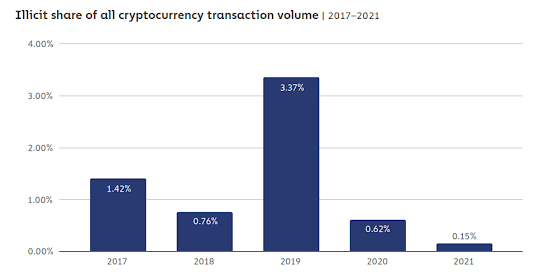
The Chainalysis 2022 Crypto Crime Report

According to Chainalysis, crypto-based crime hit a new all-time high in 2021, with illicit addresses receiving $14 billion over the course of the year, up from $7.8 billion in 2020. However, this represented just 0.15% of total crypto-asset transaction volume, which grew to $15.8 trillion in 2021, up 567% from 2020’s totals. Hence, illicit activity’s share of cryptocurrency transaction volume is actually declining. [Read more]

* To get these updates sent to your inbox, please sign up here. Also, for those interested in intra-day updates and news that didn’t make the Daily Digest cut, please check out my Diigo fintech bookmarks: https://www.diigo.com/user/kiffmeister/Fintech.


Central Bank Digital Currency Workshop, Hosted by the CBDC Think Tank

The CBDC Think Tank (CBDCTT)  is hosting an in-person CBDC Workshop in Washington DC on February 24 exclusively for central bank and finance ministry staff looking to understand and position for CBDC issuance.  [Register here]

Also, in Q2 2022, the CBDCTT will launch the OpenCBDC Sandbox for evaluating, studying and learning from the OpenCBDC Boston Fed and the MIT Digital Currency Institute open source CBDC platform. It will provide easy to use access, with the CBDCTT providing training and all updates. It’s available exclusively to central banks and official institutions. [Read more]
Kiffmeister’s #Fintech Daily Digest (02/04/2022)*

Pilot CBDC outage due to expired certificate, ECCB says

The Eastern Caribbean Central Bank (ECCB) has revealed that an expired certificate caused its pilot central bank digital currency (CBDC), DCash, to go offline from January 14. Karina Johnson, the ECCB project manager for the DCash pilot, said that “the version of Hyperledger Fabric (HLF)”, the network that hosts DCash’s distributed ledger, “had a certificate expire”. To install an up-to-date certificate, the currency’s operators are undertaking “a version change of HLF and associated systems. [Read more]

* To get these updates sent to your inbox, please sign up here. Also, for those interested in intra-day updates and news that didn’t make the Daily Digest cut, please check out my Diigo fintech bookmarks: https://www.diigo.com/user/kiffmeister/Fintech.

Central Bank Digital Currency Workshop, Hosted by the CBDC Think Tank

The CBDC Think Tank (CBDCTT)  is hosting an in-person CBDC Workshop in Washington DC on February 24 exclusively for central bank and finance ministry staff looking to understand and position for CBDC issuance.  [Register here]


Kiffmeister’s #Fintech Daily Digest (02/02/2022)*

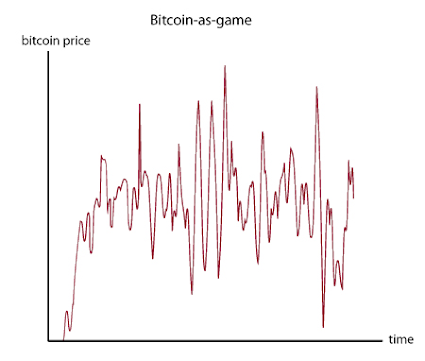
Three potential paths for the price of bitcoin

JP Koning provides some advice on whether to buy bitcoin at current levels (around $38,000). He offers three visualizations of the future path for the price of bitcoin to help with that decision. If it’s slowly becoming money then buying and holding, ignoring its diminishing (proportional) volatility is a good strategy. If bitcoin is a bubble, buying could be disastrous because eventually it’ll be worth zero. If bitcoin is a game, it depends if you’re getting into the game early (when bitcoin is a good buy) or late (bad).

I’m intrigued by the “game” scenario, which implies that bitcoin’s price will never stabilize. There will always be big downward and upward spikes, which make it such an exciting game.  And new game players will re-enter to play after every downward spike, re-anchoring bitcoin’s price and setting the stage for the next ramp up. Also, for the foreseeable future, bitcoin’s price will continuously hit a terminal ceiling ($50,000? $200,000?) dictated by its maximum participation rate (5%? 15?). [Read more here, including the comments!]

* To get these updates sent to your inbox, please sign up here. Also, for those interested in intra-day updates and news that didn’t make the Daily Digest cut, please check out my Diigo fintech bookmarks: https://www.diigo.com/user/kiffmeister/Fintech.

Central Bank Digital Currency Workshop, Hosted by the CBDC Think Tank 

The CBDC Think Tank (CBDCTT)  is hosting an in-person CBDC Workshop in Washington DC on February 24 exclusively for central bank and finance ministry staff looking to understand and position for CBDC issuance.  [Register here]

Kiffmeister’s #Fintech Daily Digest (02/01/2022)*

Diem Confirms Shutdown as Silvergate Acquires the Project’s Assets

Silvergate Bank confirmed that it’s purchasing Diem’s development, deployment and operations tools, as well as tools “for running a blockchain-based payment network” for remittances and other applications.  The Diem Association, the stablecoin project from Meta Platforms,  will “begin the process of winding down” both the group and its subsidiaries over the next few weeks. Silvergate Bank described Diem’s work as running “in a pre-launch phase.” Silvergate CEO Alan Lane said they hope to launch a stablecoin by the end of this year. [Read more]

India to impose 30% tax on crypto income, CBDC in 2022-2023

India will begin levying a 30% tax on all income from crypto-asset transfers, according to the country’s Finance Minister in her budget speech. The 30% tax rate is double the 15% on short capital gains for stocks, but most crypto holders already fall into the 30% tax bracket. A 1% tax will be deducted at source on payments or fees paid in relation to the transfer of crypto-assets. Also the Finance Minister said that a digital rupee will be issued within the coming tax year ending March 2023. [Read more]

Central Bank of Jordan studying the launch of CBDC

Governor of the Central Bank of Jordan reportedly confirmed that the bank is currently studying plans to issue a central bank digital currency (CBDC). These comments were made during a Lower House Economy and Investment Committee meeting on January 30, 2022. [Read more]

Stablecoins: Growth Potential and Impact on Banking

The Fed published a paper that discusses reserve-backed stablecoins’ impact on bank balance sheets and credit intermediation under plausible assumptions. It finds the impact on traditional banking and credit provision can vary depending on the source of inflow and the composition of stablecoin reserves. Among the various scenarios, a two-tiered banking system can support both stablecoin issuance and maintain traditional forms of credit creation. In contrast, a narrow-bank stablecoin framework is the most stable but at the potential cost of credit disintermediation. [Read more]

Thailand axes planned 15% cryptocurrency tax

Thailand has reportedly scrapped plans to impose a 15 per cent withholding tax on crypto transactions after facing pushback from traders in one of south-east Asia’s biggest markets for digital currencies. Tax officials in the country said on Monday that people who earned income from cryptocurrency trading or mining could report these as capital gains on their income taxes. [Read more]

For those of you that missed this late addition to yesterday’s Daily Digest:

Trends of Issuing Central Bank Digital Currency in the Arab Region

An Arab Monetary Fund survey found that 76% of 17 Arab central banks are studying the possibilities of issuing central bank digital currency (CBDC), and three of them are participating in experiments to issue them. Two are expected to issue a CBDC in the next three years, while 60% of them expect to be able to issue within six years. 69% of Arab central banks are in the process of determining the type of CBDC issue, while 25% of them are involved in projects/studies to issue more than one type of CBDCs. Financial inclusion comes at the top of the motives to issue retail CBDCs, while for wholesale CBDCs it is combating money laundering and terrorist financing. [Read more]

* To get these updates sent to your inbox, please sign up here. Also, for those interested in intra-day updates and news that didn’t make the Daily Digest cut, please check out my Diigo fintech bookmarks: https://www.diigo.com/user/kiffmeister/Fintech.

Central Bank Digital Currency Workshop, Hosted by the CBDC Think Tank

The CBDC Think Tank (CBDCTT)  is hosting an in-person CBDC Workshop in Washington DC on February 24 exclusively for central bank and finance ministry staff looking to understand and position for CBDC issuance.  [Register here]